


Precision agriculture relies on detailed knowledge of soil properties. Understanding soil texture, specifically the proportion of sand, silt, and clay, is fundamental to effective soil management.
This knowledge informs decisions regarding irrigation, fertilization, and tillage practices. Soil spectroscopy offers a rapid and cost-effective way to assess soil texture, enhancing precision in agricultural practices.
This article explores the application of soil spectroscopy soil texture analysis in modern agriculture. We will examine how this technology improves soil management by providing detailed insights into soil composition, particle size distribution, and water holding capacity.
The Importance of Soil Texture
Soil texture profoundly influences several critical soil properties. These properties include water infiltration, aeration, nutrient retention, and root penetration.
The relative proportions of sand, silt, and clay dictate how well soil holds water. Sandy soils have large particles and drain quickly, while clay soils have small particles and retain water for longer periods.
Understanding soil texture is essential for optimizing irrigation practices. Knowing the water holding capacity allows farmers to apply the right amount of water, preventing both drought stress and waterlogging.
Nutrient retention is also closely linked to soil texture. Clay particles, due to their high surface area and negative charge, bind to positively charged nutrients, preventing them from being leached out of the soil.
Soil texture impacts the ease with which roots can penetrate the soil. Compacted clay soils can restrict root growth, limiting access to water and nutrients.
Sandy soils, while easy to penetrate, may not provide sufficient support for plant anchorage. A balanced soil texture, with a good mix of sand, silt, and clay, is ideal for most crops.
Soil aeration, the availability of oxygen in the soil, is also influenced by texture. Coarse-textured sandy soils allow for better air circulation compared to fine-textured clay soils.
Proper aeration is crucial for root respiration and the activity of beneficial soil microorganisms. These microorganisms play a vital role in nutrient cycling and plant health.
Therefore, characterizing soil texture is a fundamental step in understanding overall soil health and productivity. It provides a basis for making informed decisions about soil management practices.
Ignoring soil texture can lead to inefficient use of resources and reduced crop yields. Farmers need accurate and timely information on soil texture to optimize their operations.
Soil texture also affects the soil’s ability to buffer against changes in pH. Clay soils have a higher buffering capacity than sandy soils, meaning they are more resistant to changes in pH.
Maintaining the optimal pH range is crucial for nutrient availability and plant growth. Soil texture, therefore, plays a role in managing soil acidity or alkalinity.
The influence of soil texture extends to the soil’s thermal properties as well. Dark-colored clay soils tend to warm up more slowly than light-colored sandy soils.
This difference in soil temperature can affect seed germination and early plant growth. Understanding these nuances allows for fine-tuning of planting schedules.
Traditional Methods of Soil Texture Analysis
Traditional methods of soil texture analysis typically involve manual techniques. These techniques, such as the hydrometer method and the pipette method, require significant time and labor.
The hydrometer method involves dispersing soil in water and measuring the settling rate of particles. By measuring the density of the suspension at different times, the proportions of sand, silt, and clay can be estimated.
The pipette method is similar but involves extracting samples from the suspension at specific depths and times. The samples are then dried and weighed to determine the concentration of each particle size fraction.
While these methods are relatively accurate, they are also time-consuming and costly. The need for specialized equipment and trained personnel limits their practicality for large-scale soil surveys.
The “feel” method is another traditional technique, relying on tactile assessment of soil texture. Experienced individuals can estimate the proportions of sand, silt, and clay by rubbing moist soil between their fingers.
While quick and inexpensive, the feel method is subjective and prone to error. The accuracy depends heavily on the skill and experience of the person performing the assessment.
Sieving is also used to separate sand fractions based on particle size. This involves passing the soil through a series of sieves with different mesh sizes.
The material retained on each sieve represents a specific sand size fraction. However, sieving does not separate silt and clay, requiring additional methods for their determination.
These traditional methods often require extensive sample preparation, including drying, grinding, and removal of organic matter. These steps add to the time and labor involved in the analysis.
Furthermore, the results of traditional methods can be affected by factors such as the presence of aggregates and the degree of soil dispersion. Careful attention to detail is required to ensure accurate results.
The manual nature of these methods also makes them susceptible to human error. Variations in technique and judgment can lead to inconsistencies in the results.
The cost of chemicals and consumables used in these methods can also be significant, especially for large-scale soil surveys. This cost can be a barrier for resource-limited farmers and researchers.
The disposal of chemicals used in traditional soil texture analysis can also pose environmental concerns. Proper waste management practices are essential to minimize the environmental impact.
Despite their limitations, traditional methods remain valuable for validating and calibrating new techniques, such as soil spectroscopy. They provide a benchmark against which the accuracy of new methods can be assessed.
Using Spectroscopy to Determine Soil Texture
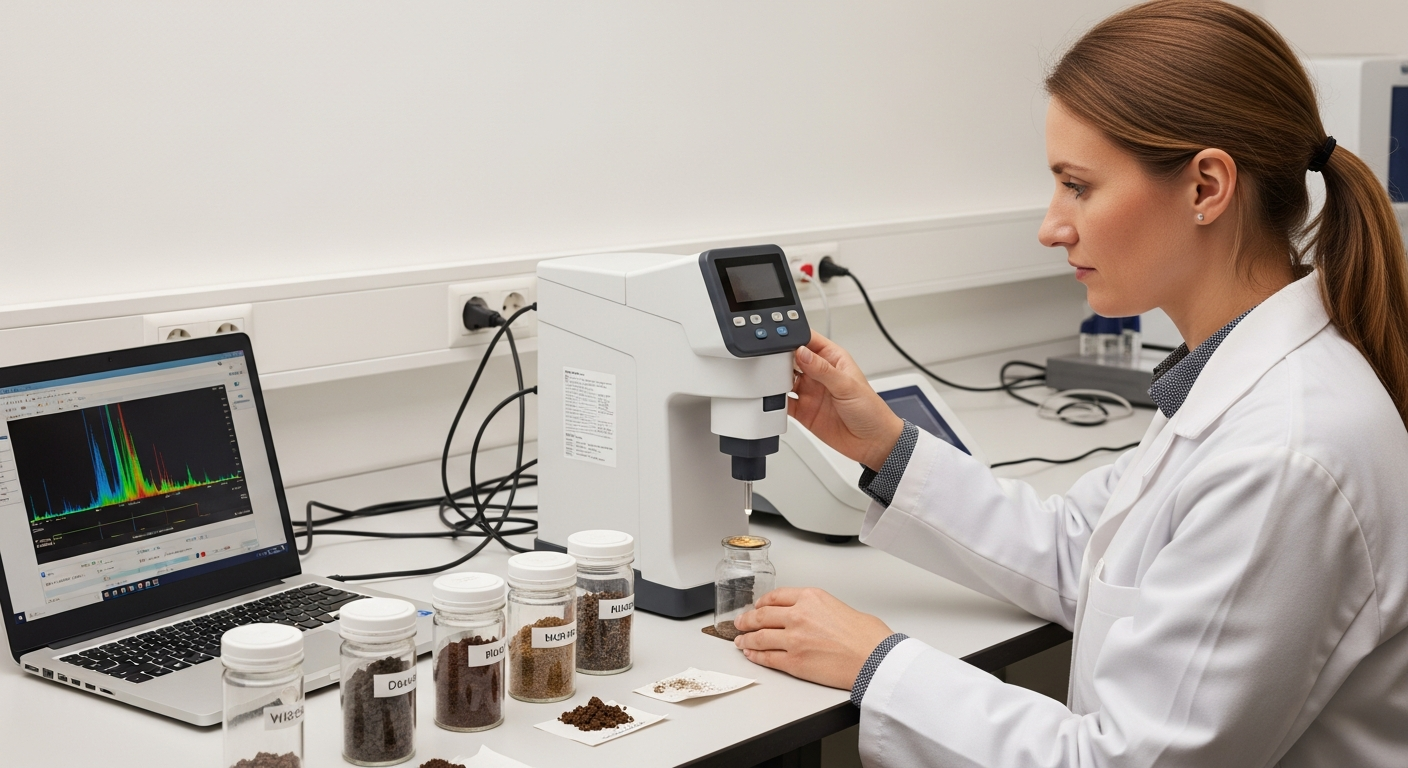
Spectroscopy offers a faster and more efficient alternative to traditional soil texture analysis. This technique involves measuring the interaction of electromagnetic radiation with soil samples.
Different soil components absorb and reflect light at different wavelengths. By analyzing the spectral signature of a soil sample, the composition, including particle size distribution, can be determined.
| Soil Component | Wavelength Range (nm) | Absorption Feature |
|---|---|---|
| Clay Minerals | 1400, 1900, 2200 | O-H stretching, Al-OH bending |
| Organic Matter | 400-700 | Broad absorption due to electronic transitions |
| Iron Oxides | 400-900 | Charge transfer and electronic transitions |
| Sand (Quartz) | No distinct features | Generally featureless in the visible and near-infrared range |
Spectroscopic analysis can be performed using various instruments, including visible and near-infrared (Vis-NIR) spectrometers. These instruments can be deployed in the field or laboratory, providing flexibility in data collection.
The spectral data is then processed using chemometric techniques to develop calibration models. These models relate the spectral features to soil texture parameters, allowing for rapid prediction of particle size distribution.
The process typically involves collecting spectral data from a set of soil samples with known texture, determined using traditional methods. These samples serve as the calibration set for building the predictive model.
Chemometric techniques, such as partial least squares regression (PLSR), are used to establish a relationship between the spectral data and the soil texture parameters. The resulting calibration model can then be used to predict the texture of unknown soil samples based on their spectral signatures.
The accuracy of the spectroscopic predictions depends on the quality of the calibration set and the robustness of the chemometric model. Careful selection of representative samples and appropriate data pre-processing are crucial for building accurate models.
Different types of spectrometers can be used for soil texture analysis, including benchtop, portable, and handheld instruments. Benchtop spectrometers offer the highest accuracy and precision but are typically confined to laboratory settings.
Portable and handheld spectrometers provide greater flexibility for field measurements but may have lower accuracy compared to benchtop instruments. The choice of instrument depends on the specific application and the desired level of accuracy.
Spectroscopic analysis can also be used to assess other soil properties, such as organic matter content, nutrient levels, and moisture content. This makes it a versatile tool for comprehensive soil characterization.
The use of spectral libraries, which contain spectral data from a wide range of soil types, can further enhance the accuracy and efficiency of spectroscopic analysis. These libraries provide a reference database for comparing the spectral signatures of unknown samples.
Remote sensing techniques, such as aerial and satellite spectroscopy, can be used to map soil texture over large areas. These techniques provide a cost-effective way to assess soil variability at the landscape scale.
The integration of spectroscopic data with geographic information systems (GIS) allows for the creation of detailed soil maps that can be used for precision agriculture and land management. This integration enables spatial analysis and visualization of soil properties.
Benefits of Rapid Soil Texture Assessment
Rapid soil texture assessment using spectroscopy offers several advantages over traditional methods. The speed of analysis allows for more frequent and comprehensive soil surveys.
This is particularly beneficial in precision agriculture, where detailed soil maps are needed for site-specific management. The ability to quickly analyze soil samples enables farmers to make timely decisions about irrigation, fertilization, and other inputs.
Spectroscopy also reduces the cost and labor associated with soil analysis. The automated nature of the technique minimizes the need for manual handling and reduces the potential for human error.
Moreover, spectroscopic methods are non-destructive, meaning that the soil sample is not altered during analysis. This allows for further analysis of the same sample using other techniques, if needed.
The increased speed of analysis translates directly into faster turnaround times for soil test results. This allows farmers to respond more quickly to changing soil conditions and make timely adjustments to their management practices.
The reduced cost of analysis makes it more feasible to conduct frequent soil tests, providing a more dynamic and accurate picture of soil variability. This allows for more precise and targeted management interventions.
The non-destructive nature of spectroscopic methods also allows for the creation of soil archives, where samples can be stored and re-analyzed in the future. This provides a valuable resource for tracking changes in soil properties over time.
The ability to analyze soil samples in the field using portable spectrometers eliminates the need to transport samples to a laboratory, further reducing the time and cost of analysis. This allows for real-time soil assessment and immediate decision-making.
The use of spectroscopic methods can also reduce the environmental impact of soil analysis by minimizing the use of chemicals and reducing waste generation. This contributes to more sustainable soil management practices.
The detailed soil maps generated from spectroscopic data can be used to optimize the placement of irrigation systems, fertilizer applicators, and other equipment, improving the efficiency of agricultural operations. This leads to more precise resource allocation and reduced environmental impact.
The rapid assessment of soil texture allows for the identification of problem areas in the field, such as areas with poor drainage or nutrient deficiencies. This enables farmers to focus their management efforts on these areas, improving overall field productivity.
The ability to quickly analyze soil texture can also be valuable for land valuation and soil classification purposes. Accurate soil information is essential for making informed decisions about land use and development.
The use of spectroscopic methods can also facilitate the development of soil health indicators, which can be used to monitor the long-term sustainability of agricultural practices. This allows for a more holistic assessment of soil quality.
The benefits of rapid soil texture assessment extend beyond the farm level, contributing to improved regional and national soil resource management. Accurate soil information is essential for developing effective policies and programs to protect and enhance soil health.
Integrating Texture Data into Soil Management Plans
Soil texture data obtained from spectroscopy can be integrated into soil management plans to optimize agricultural practices. This integration allows for site-specific management strategies tailored to the unique characteristics of each field.
For example, fields with sandy soils may require more frequent irrigation to compensate for their low water holding capacity. In contrast, fields with clay soils may benefit from improved drainage to prevent waterlogging.
- Adjust irrigation schedules based on water holding capacity
- Tailor fertilization rates to nutrient retention potential
- Modify tillage practices to improve soil structure
- Select appropriate crop varieties for specific soil types
- Implement soil conservation measures to prevent erosion
Fertilization strategies can also be optimized based on soil texture. Clay soils, with their high nutrient retention capacity, may require lower fertilizer application rates compared to sandy soils.
By understanding the relationship between soil texture and nutrient availability, farmers can minimize fertilizer waste and reduce the risk of environmental pollution. Soil spectroscopy soil texture analysis is critical.
Tillage practices can be adjusted to improve soil structure based on texture. Clay soils may benefit from reduced tillage to prevent compaction, while sandy soils may require more frequent tillage to improve water infiltration.
Crop selection can be tailored to the specific soil texture. Certain crops are better adapted to sandy soils, while others thrive in clay soils.
Soil conservation measures, such as cover cropping and contour plowing, can be implemented to prevent erosion based on soil texture. Sandy soils are more susceptible to wind erosion, while clay soils are more prone to water erosion.
Soil texture data can also be used to optimize the application of soil amendments, such as compost and manure. These amendments can improve soil structure, water holding capacity, and nutrient availability.
The integration of soil texture data into precision agriculture systems allows for variable rate application of inputs, where the amount of irrigation, fertilizer, and other inputs is adjusted based on the specific needs of each area of the field. This leads to more efficient resource use and reduced environmental impact.
Soil texture data can also be used to develop soil maps that can be used for land management planning. These maps can help to identify areas that are suitable for different types of agriculture or development.
The integration of soil texture data with other soil information, such as nutrient levels and organic matter content, provides a more comprehensive understanding of soil health. This allows for more targeted and effective soil management strategies.
Soil texture data can also be used to monitor the effects of climate change on soil properties. Changes in temperature and precipitation patterns can affect soil texture and other soil characteristics.
The use of soil texture data in soil management plans can help to improve the resilience of agricultural systems to climate change. By adapting management practices to changing soil conditions, farmers can minimize the negative impacts of climate change on crop yields.
The integration of soil texture data into decision support systems can provide farmers with real-time recommendations on soil management practices. These systems can help farmers to make informed decisions about irrigation, fertilization, and other inputs.
Soil texture data can also be used to educate farmers and other stakeholders about the importance of soil health. By understanding the relationship between soil texture and soil function, farmers can make more informed decisions about soil management.
Challenges in Spectroscopic Texture Analysis
Despite its advantages, spectroscopic texture analysis faces several challenges. The accuracy of spectroscopic predictions depends on the quality of the calibration models.
Developing robust calibration models requires a large and representative dataset of soil samples with known texture. The spectral data must be carefully pre-processed to remove noise and correct for variations in moisture content and other factors.
Soil heterogeneity can also pose a challenge. Soil texture can vary significantly within a field, and a single spectroscopic measurement may not capture this variability.
To address this, multiple measurements may be needed to obtain a representative assessment of soil texture across the field. The initial investment in spectroscopic equipment and software can be a barrier for some farmers.
The cost of acquiring and maintaining spectroscopic equipment can be significant, especially for small-scale farmers. Training personnel to operate the equipment and interpret the data also requires an investment of time and resources.
The accuracy of spectroscopic predictions can be affected by factors such as soil moisture content, surface roughness, and the presence of organic matter. These factors can influence the spectral reflectance of the soil, making it difficult to accurately predict texture.
The development of calibration models that are applicable to a wide range of soil types can be challenging. Soil properties can vary significantly depending on the geographic location and the parent material from which the soil was formed.
The availability of reference data for validating spectroscopic predictions can be limited. Accurate and reliable soil texture data, obtained using traditional methods, is needed to assess the performance of spectroscopic models.
The interpretation of spectroscopic data can be complex, requiring expertise in chemometrics and soil science. The development of user-friendly software and training programs can help to make spectroscopic texture analysis more accessible to a wider audience.
The integration of spectroscopic data with other soil information, such as nutrient levels and organic matter content, can be challenging. The development of integrated data management systems is needed to facilitate the use of spectroscopic data in soil management plans.
The acceptance of spectroscopic texture analysis by farmers and other stakeholders can be slow. Demonstrating the benefits of this technology through field trials and extension programs is essential for promoting its adoption.
The standardization of spectroscopic methods and calibration procedures is needed to ensure the comparability of results across different laboratories and regions. This will facilitate the widespread adoption of this technology.
The long-term stability of spectroscopic calibration models needs to be evaluated. Soil properties can change over time, which can affect the accuracy of spectroscopic predictions.
The development of cost-effective and reliable spectroscopic sensors is crucial for making this technology accessible to a wider range of users. This will help to promote the adoption of spectroscopic texture analysis in precision agriculture and soil resource management.
Future Trends in Soil Spectroscopy
The field of soil spectroscopy is continually evolving. Advances in sensor technology and data analysis are improving the accuracy and applicability of this technique.
The development of portable and handheld spectrometers is making it easier to collect soil data in the field. These devices allow for real-time soil assessment, enabling farmers to make immediate decisions about soil management.
The integration of spectroscopy with other technologies, such as drones and satellite imagery, is also expanding the possibilities for soil monitoring. Drones equipped with hyperspectral cameras can capture high-resolution spectral data over large areas, providing a comprehensive view of soil variability.
Satellite imagery can be used to monitor soil properties over even larger scales, providing valuable information for regional-scale soil management. The combination of these technologies offers a powerful tool for precision agriculture.
The use of artificial intelligence (AI) and machine learning (ML) is revolutionizing the analysis of spectroscopic data. AI and ML algorithms can be used to develop more accurate and robust calibration models.
These algorithms can also be used to identify complex relationships between spectral data and soil properties that are not easily detected using traditional chemometric techniques. This leads to improved predictions and a better understanding of soil processes.
The development of spectral libraries that are specific to different regions and soil types is another important trend. These libraries provide a valuable resource for calibrating spectroscopic models and improving the accuracy of predictions.
The use of cloud computing and data sharing platforms is facilitating the development and dissemination of spectroscopic models and data. This allows researchers and practitioners to collaborate more effectively and share their knowledge and expertise.
The development of low-cost spectroscopic sensors is making this technology more accessible to small-scale farmers and developing countries. This will help to promote the adoption of sustainable soil management practices in these regions.
The integration of spectroscopic data with other data sources, such as weather data and crop yield data, is providing a more holistic view of agricultural systems. This allows for the development of more effective and targeted management strategies.
The use of spectroscopic techniques for monitoring soil health is gaining increasing attention. Spectroscopic data can be used to assess a wide range of soil health indicators, such as organic matter content, nutrient levels, and microbial activity.
The development of standardized protocols for spectroscopic soil analysis is needed to ensure the comparability of results across different laboratories and regions. This will facilitate the widespread adoption of this technology.
The use of spectroscopic techniques for detecting soil contamination is also an emerging trend. Spectroscopic data can be used to identify and map areas that are contaminated with heavy metals, pesticides, and other pollutants.
The development of spectroscopic sensors that can be deployed on autonomous vehicles, such as drones and robots, is opening up new possibilities for soil monitoring. This will allow for more frequent and comprehensive assessments of soil properties.
Case Studies of Spectroscopic Texture Analysis
Several case studies have demonstrated the effectiveness of spectroscopic texture analysis in improving soil management. A study in California used Vis-NIR spectroscopy to map soil texture in vineyards.
The resulting soil maps were used to optimize irrigation and fertilization practices, leading to increased grape yields and improved fruit quality. Another study in the Midwest used spectroscopy to assess soil texture in cornfields.
The soil maps were used to guide variable rate seeding and fertilizer application, resulting in higher corn yields and reduced input costs. A project in Australia used spectroscopy to monitor soil texture in wheat fields.
The spectral data was used to detect changes in soil texture over time, allowing farmers to adjust their management practices to maintain soil health. These case studies illustrate the practical benefits of soil spectroscopy soil texture analysis in a range of agricultural settings.
A case study in Brazil used spectroscopic techniques to assess soil texture and organic matter content in sugarcane fields. The results were used to optimize fertilizer application and improve sugarcane yields.
A study in China used spectroscopic methods to map soil texture and salinity in rice paddies. The soil maps were used to guide irrigation and drainage management, improving rice yields and reducing soil salinization.
A project in Africa used portable spectrometers to assess soil texture and nutrient levels in smallholder farms. The data was used to provide farmers with tailored recommendations on soil management practices, improving crop yields and food security.
A case study in Europe used spectroscopic techniques to monitor soil texture and organic matter content in grasslands. The results were used to assess the impact of different grazing management practices on soil health.
A study in Canada used spectroscopic methods to map soil texture and moisture content in forest soils. The soil maps were used to guide forest management practices and reduce the risk of wildfires.
A project in India used spectroscopic techniques to assess soil texture and nutrient levels in vegetable gardens. The data was used to provide gardeners with tailored recommendations on soil management practices, improving vegetable yields and nutritional quality.
These case studies highlight the versatility of spectroscopic texture analysis and its potential to improve soil management in a wide range of agricultural and environmental settings. The use of this technology is becoming increasingly common.
The successful implementation of spectroscopic texture analysis requires a collaborative effort between researchers, practitioners, and policymakers. This collaboration is essential for developing and disseminating this technology.
The long-term sustainability of agricultural systems depends on the adoption of soil management practices that are both economically viable and environmentally sound. Spectroscopic texture analysis can play a key role in achieving this goal.
The future of agriculture lies in the integration of advanced technologies, such as spectroscopic texture analysis, with traditional farming knowledge. This integration will enable farmers to manage their soils more effectively and sustainably.
Soil Spectroscopy Soil Texture Analysis and Sustainability
Spectroscopic texture analysis contributes to sustainable agriculture by promoting efficient resource use. By optimizing irrigation and fertilization practices, farmers can reduce water consumption and minimize nutrient runoff.
This helps to conserve water resources and protect water quality. Reducing fertilizer use also lowers greenhouse gas emissions associated with fertilizer production and application.
Furthermore, spectroscopic texture analysis can help to improve soil health. By understanding the relationship between soil texture and soil structure, farmers can implement tillage practices that minimize soil compaction and erosion.
This helps to maintain soil fertility and prevent land degradation. Soil spectroscopy soil texture analysis helps improve sustainability.
The use of spectroscopic techniques can also help to reduce the reliance on chemical inputs in agriculture. By providing a more accurate assessment of soil nutrient levels, farmers can optimize fertilizer application and minimize the risk of over-fertilization.
This can lead to a reduction in the use of pesticides and herbicides, as healthy soils are more resistant to pests and diseases. This contributes to a more sustainable and environmentally friendly agricultural system.
Spectroscopic texture analysis can also help to promote carbon sequestration in soils. By improving soil health and promoting plant growth, farmers can increase the amount of carbon that is stored in the soil.
This can help to mitigate climate change by reducing the amount of carbon dioxide in the atmosphere. Sustainable soil management practices are essential for addressing climate change.
The use of spectroscopic techniques can also help to improve the resilience of agricultural systems to climate change. By providing a more accurate assessment of soil moisture content, farmers can optimize irrigation practices and minimize the risk of drought stress.
This can help to ensure food security in the face of changing climate conditions. Resilient agricultural systems are crucial for adapting to climate change.
Spectroscopic texture analysis can also help to promote biodiversity in agricultural landscapes. By providing a more accurate assessment of soil conditions, farmers can select crop varieties that are best suited to the local environment.
This can lead to a more diverse and resilient agricultural system. Biodiversity is essential for maintaining ecosystem services and ensuring long-term sustainability.
The use of spectroscopic techniques can also help to improve the livelihoods of farmers. By providing a more accurate assessment of soil conditions, farmers can optimize their management practices and increase crop yields.
This can lead to increased income and improved living standards. Sustainable agriculture is essential for promoting economic development and reducing poverty.
The integration of spectroscopic texture analysis into agricultural education and extension programs is essential for promoting its adoption by farmers. This will help to ensure that farmers have the knowledge and skills they need to manage their soils sustainably.
The development of supportive policies and regulations is also needed to promote the adoption of spectroscopic texture analysis. This will help to create a level playing field for farmers who are committed to sustainable agriculture.
Conclusion
Soil spectroscopy offers a powerful tool for rapid and cost-effective soil texture analysis. This technology enables farmers to make informed decisions about soil management, optimizing irrigation, fertilization, and tillage practices.
By integrating texture data into soil management plans, farmers can improve crop yields, reduce input costs, and promote sustainable agricultural practices. While challenges remain, ongoing advances in sensor technology and data analysis are expanding the possibilities for soil monitoring.
Soil spectroscopy soil texture analysis is critical for farmers. The integration of spectroscopy with other technologies, such as drones and satellite imagery, holds great promise for precision agriculture.
As the demand for sustainable agricultural practices grows, soil spectroscopy is likely to play an increasingly important role in ensuring food security and environmental stewardship. Soil composition and particle size distribution are key