
Precision irrigation is revolutionizing how we manage water resources in agriculture. By understanding the intricate relationship between soil and water, we can optimize irrigation practices and improve water use efficiency. Soil mineralogy plays a surprisingly large role in this optimization.
Analyzing the mineral composition of soil allows us to tailor irrigation strategies to specific field conditions. This is not just about watering plants; it’s about providing the right amount of water, at the right time, to the right place.
This guide outlines how you can use soil mineralogy data to make informed irrigation decisions, leading to healthier crops and significant water savings. Understanding soil composition is the first step towards achieving truly precise irrigation and maximizing your farm’s potential. Let’s get started.
The Link Between Soil Mineralogy and Irrigation Needs
Soil mineralogy directly influences water retention, drainage, and nutrient availability. These factors are foundational to understanding irrigation requirements. The type and amount of minerals present in the soil dictate how water is stored and released to plant roots.
For instance, clay minerals like montmorillonite have a high water-holding capacity, meaning soils rich in these minerals require less frequent irrigation. Sandy soils, on the other hand, have a lower water-holding capacity and need more frequent, smaller irrigation doses. Understanding these differences is essential for efficient water management.
Different minerals also affect the soil’s ability to supply essential nutrients to plants. Some minerals release nutrients slowly over time, while others bind nutrients tightly, making them less accessible to plant roots. This influences not only irrigation needs but also fertilization strategies.
Therefore, a detailed understanding of soil mineralogy is crucial for developing effective precision irrigation plans. Ignoring these factors can lead to over- or under-watering, nutrient imbalances, and reduced crop yields. Soil mineralogy precision irrigation is the future.
Assessing Soil Mineral Composition for Irrigation Planning
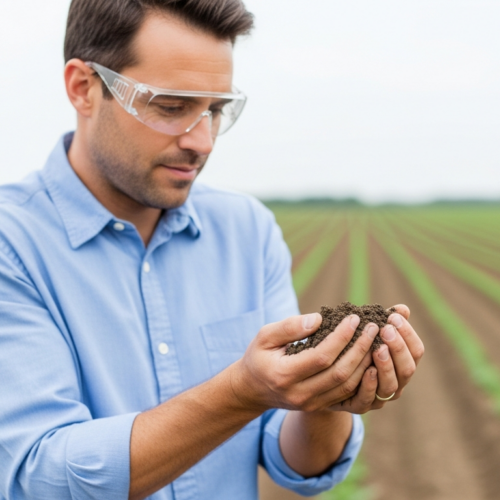
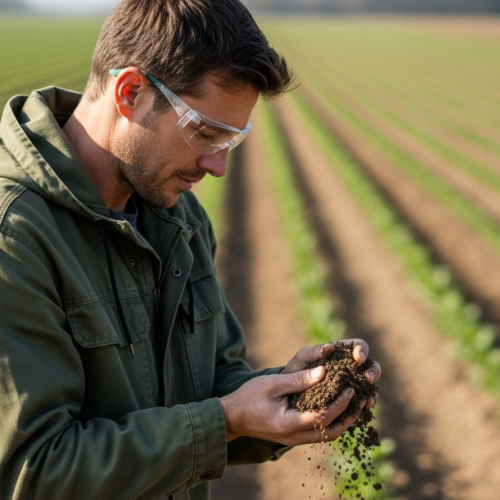
The first step in leveraging soil mineralogy for precision irrigation is accurately assessing your soil’s composition. Several methods exist for analyzing soil mineral content, each with its own advantages and limitations. Choosing the right method depends on your budget, the level of detail required, and the resources available.

Traditional laboratory analysis involves collecting soil samples and sending them to a certified lab for detailed mineralogical analysis. These labs use techniques such as X-ray diffraction (XRD) and optical microscopy to identify and quantify the minerals present in the soil. This provides a comprehensive understanding of soil composition.
Spectroscopic methods, such as near-infrared (NIR) spectroscopy, offer a rapid and cost-effective alternative to traditional lab analysis. NIR spectroscopy involves shining a beam of light onto a soil sample and analyzing the reflected light to determine its mineral composition. While less precise than XRD, NIR spectroscopy is suitable for large-scale soil mapping and monitoring.
Remote sensing techniques, using satellite or aerial imagery, can also provide valuable information about soil mineralogy over large areas. These techniques rely on analyzing the spectral reflectance of the soil surface to infer its mineral composition. Remote sensing is particularly useful for identifying areas with significant variations in soil mineralogy, which can then be targeted for more detailed analysis.
Using Mineralogy Data to Determine Irrigation Frequency
Once you have a detailed understanding of your soil’s mineral composition, you can use this information to determine the optimal irrigation frequency. Different minerals have different water-holding capacities, which directly impact how often you need to irrigate. Clay minerals, like montmorillonite and illite, have high water-holding capacities.
Sandy soils, dominated by minerals like quartz and feldspar, have low water-holding capacities. Therefore, soils with a high clay content will require less frequent irrigation than sandy soils. Soil mineralogy allows you to plan with confidence.
| Soil Type | Dominant Minerals | Water Holding Capacity | Irrigation Frequency |
|---|---|---|---|
| Sandy Soil | Quartz, Feldspar | Low | High |
| Silty Soil | Quartz, Mica | Medium | Medium |
| Clay Soil | Montmorillonite, Illite | High | Low |
| Loamy Soil | Mix of Sand, Silt, Clay | Variable | Variable |
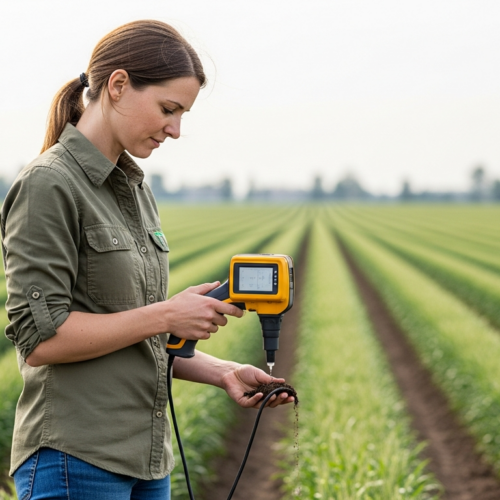
To determine the specific irrigation frequency for your soil, consider using soil moisture sensors. These sensors measure the amount of water available in the soil and can be used to trigger irrigation events only when necessary. Integrating soil moisture data with mineralogy data provides a more precise approach to irrigation scheduling.
Adjusting Irrigation Based on Soil Type and Mineral Content
Adjusting irrigation practices based on soil type and mineral content is crucial for maximizing water use efficiency. Different soil types require different irrigation strategies to ensure optimal plant growth. Sandy soils, with their low water-holding capacity, benefit from frequent, light irrigation.
This prevents water from percolating too quickly through the soil profile and becoming unavailable to plant roots. Clay soils, on the other hand, require less frequent but more substantial irrigation to ensure that water penetrates the soil profile and reaches the root zone. Avoiding over-watering is key.
In addition to soil type, the mineral content of the soil can also influence irrigation adjustments. Soils rich in certain minerals, such as gypsum, may require more frequent irrigation to prevent the buildup of salts in the root zone. Other minerals, like iron oxides, can affect the availability of certain nutrients in the soil, which may need to be addressed through adjustments to irrigation and fertilization practices.
Consider using variable rate irrigation (VRI) technology to tailor irrigation applications to specific areas within a field based on soil type and mineral content. VRI systems use GPS and soil maps to adjust the amount of water applied to different zones, ensuring that each area receives the optimal amount of irrigation. This is an effective way to optimize water use and improve crop yields.
Optimizing Water Use Efficiency
Optimizing water use efficiency is not just an environmental imperative, it’s also a smart business decision. By using soil mineralogy data to fine-tune irrigation practices, you can significantly reduce water consumption while maintaining or even increasing crop yields. This leads to lower water bills, reduced energy costs, and improved profitability.
Implementing water-saving irrigation techniques, such as drip irrigation and micro-sprinklers, is essential for maximizing water use efficiency. Drip irrigation delivers water directly to the plant roots, minimizing water loss through evaporation and runoff. Micro-sprinklers provide a more uniform distribution of water compared to traditional sprinkler systems.
Regularly monitoring soil moisture levels is crucial for optimizing water use efficiency. Soil moisture sensors provide real-time data on the amount of water available in the soil, allowing you to make informed decisions about when and how much to irrigate. Integrating soil moisture data with weather forecasts can further improve irrigation scheduling.
Consider implementing deficit irrigation strategies, where you intentionally apply less water than the crop’s potential evapotranspiration demand. This can be an effective way to reduce water consumption without significantly impacting crop yields, especially during certain growth stages. Monitor plant stress levels closely to avoid yield losses.
Integrating Mineralogy Data with Irrigation Systems
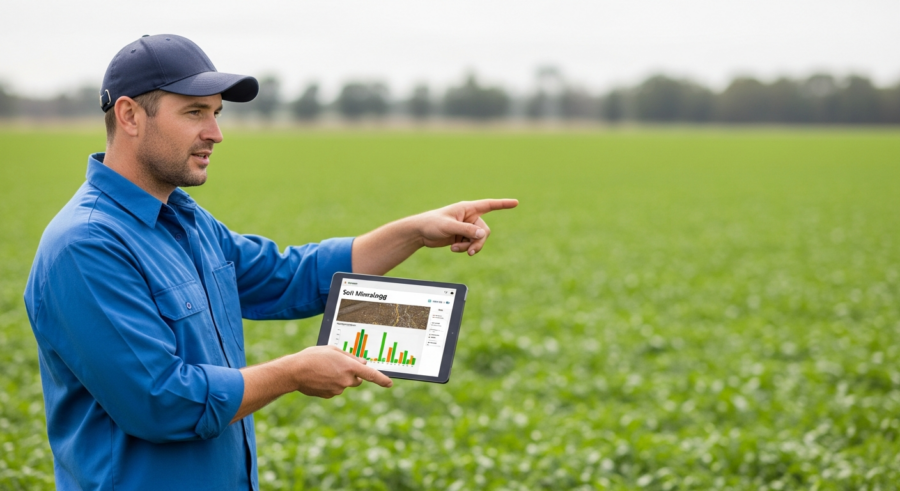
Integrating soil mineralogy data with modern irrigation systems allows for automated and highly precise water management. This integration involves using soil maps and mineralogical data to program irrigation controllers and variable rate irrigation (VRI) systems. The goal is to create a system that automatically adjusts irrigation based on the specific needs of different zones within a field.
To achieve this integration, you’ll need to combine soil mineralogy data with other relevant data sources, such as soil moisture sensor readings, weather forecasts, and crop evapotranspiration models. This integrated dataset can then be used to create irrigation schedules that are tailored to the specific conditions of each zone within the field. Investing in the right tech is essential.
- Develop detailed soil maps incorporating mineralogy data
- Install soil moisture sensors in representative zones
- Integrate weather forecasts for accurate evapotranspiration estimates
- Program irrigation controllers with zone-specific schedules
- Regularly monitor system performance and adjust as needed
By automating irrigation based on soil mineralogy and other relevant data, you can significantly reduce the risk of over- or under-watering. This leads to improved water use efficiency, reduced labor costs, and increased crop yields. Furthermore, you can make adjustments based on real-time conditions.
Case Studies: Successful Precision Irrigation Strategies
Several case studies demonstrate the effectiveness of using soil mineralogy data for precision irrigation. In California’s Central Valley, almond growers have used soil maps and mineralogical analysis to optimize irrigation scheduling. By tailoring irrigation to the specific water-holding capacity of different soil types, they have reduced water consumption by up to 20% while maintaining almond yields.
In the arid regions of Israel, researchers have developed irrigation strategies based on the mineral composition of desert soils. They found that by carefully managing the timing and amount of irrigation, they could successfully grow crops in areas previously considered unsuitable for agriculture. This has transformed their agricultural output.
A study in Australia examined the impact of soil mineralogy on cotton production. The researchers found that soils with high levels of smectite clay minerals required less frequent irrigation than soils with lower clay content. By adjusting irrigation schedules based on soil mineralogy, cotton growers were able to reduce water consumption and improve fiber quality.
These case studies demonstrate the potential of using soil mineralogy data to optimize irrigation practices and improve water use efficiency. While the specific strategies may vary depending on the crop, climate, and soil type, the underlying principle remains the same: understanding soil composition is crucial for effective irrigation management. Soil mineralogy precision irrigation pays off.
Overcoming Challenges in Implementing Precision Irrigation
While the benefits of precision irrigation are clear, implementing these strategies can present several challenges. One of the main hurdles is the initial cost of soil analysis and the installation of advanced irrigation systems. High-resolution soil mapping and mineralogical analysis can be expensive, especially for large farms. This can be a barrier to entry.
Another challenge is the need for specialized knowledge and expertise to interpret soil data and develop effective irrigation strategies. Farmers may need to invest in training or hire consultants to help them understand and apply soil mineralogy data. Education is key to adoption.
Data management and integration can also be a challenge. Combining soil mineralogy data with other relevant data sources, such as soil moisture sensor readings and weather forecasts, requires sophisticated data management systems. Ensuring that all data sources are compatible and accurate is essential for effective irrigation management. Data integrity is crucial.
Despite these challenges, the long-term benefits of precision irrigation often outweigh the initial costs. By reducing water consumption, improving crop yields, and minimizing nutrient losses, farmers can achieve significant economic and environmental gains. Government incentives and technical assistance programs can help offset the initial costs and facilitate the adoption of precision irrigation strategies.
The Future of Soil Mineralogy in Precision Agriculture
The future of soil mineralogy in precision agriculture looks promising, with ongoing advancements in sensing technologies and data analytics. New sensors are being developed that can provide real-time, in-situ measurements of soil mineral composition. This will allow farmers to monitor soil conditions more closely and make more informed irrigation decisions. Real-time data is a game changer.
Artificial intelligence (AI) and machine learning (ML) are also playing an increasingly important role in precision agriculture. AI and ML algorithms can be used to analyze large datasets of soil mineralogy, weather, and crop yield data to develop predictive models for irrigation scheduling. This will enable farmers to optimize irrigation practices and minimize water waste.
The integration of soil mineralogy data with other precision agriculture technologies, such as drones and autonomous vehicles, is also expected to drive further advancements. Drones equipped with hyperspectral cameras can be used to map soil mineralogy over large areas, providing farmers with detailed information about soil variability. Autonomous vehicles can be used to apply irrigation and fertilizers based on soil maps and sensor data. Automation is the future.
As these technologies continue to evolve, soil mineralogy will become an increasingly important tool for precision agriculture. By understanding the intricate relationship between soil, water, and plants, farmers can optimize irrigation practices, improve crop yields, and promote sustainable agriculture. The future is bright for soil mineralogy precision irrigation.
Conclusion
Soil mineralogy is a fundamental aspect of precision irrigation, influencing water retention, drainage, and nutrient availability. By understanding the mineral composition of your soil, you can tailor irrigation strategies to specific field conditions, optimizing water use efficiency and improving crop yields. This is a key aspect of modern farming.
From assessing soil composition to integrating mineralogy data with irrigation systems, this guide has provided a step-by-step approach to implementing precision irrigation. While challenges exist, the long-term benefits of reduced water consumption, improved crop health, and increased profitability make it a worthwhile investment. Embrace soil mineralogy precision irrigation today.