

Precision agriculture is rapidly evolving, and with it, the tools and techniques farmers use to manage their crops. One technology that is gaining significant traction is soil spectroscopy, which offers a rapid and cost-effective way to assess soil properties. This data can then be used for soil spectroscopy fertilizer optimization, leading to more efficient nutrient management and reduced environmental impact.
By understanding the specific nutrient needs of different areas within a field, farmers can tailor their fertilizer applications to match those needs. This approach is not only economically beneficial but also promotes sustainability by minimizing waste and pollution.
This article will explore how soil spectroscopy can be used for soil spectroscopy fertilizer optimization, covering everything from assessing soil nutrient levels to integrating spectroscopic data with variable rate application technologies. We will also examine the benefits of this approach and provide real-world case studies of successful implementation.
The Environmental Impact of Over-Fertilization
Over-fertilization is a significant environmental problem with far-reaching consequences. When farmers apply more fertilizer than crops can absorb, the excess nutrients can leach into the soil and water systems.
This leads to nutrient pollution, which can contaminate groundwater, rivers, and coastal ecosystems. In aquatic environments, excess nitrogen and phosphorus fuel algal blooms, which deplete oxygen levels and create dead zones that harm aquatic life.
Furthermore, the production and use of synthetic fertilizers contribute to greenhouse gas emissions. Nitrogen-based fertilizers release nitrous oxide, a potent greenhouse gas that contributes to climate change.
Ammonia volatilization from fertilized fields also contributes to air pollution. Therefore, reducing over-fertilization is essential for protecting both water quality and air quality.
The detrimental effects extend beyond immediate ecological damage. Long-term over-fertilization can alter soil composition, reducing its ability to support healthy plant growth. This can lead to soil degradation and decreased agricultural productivity over time.
The economic costs associated with over-fertilization are also substantial. Farmers waste money on excess fertilizer that doesn’t benefit their crops, and society bears the costs of cleaning up polluted water sources and mitigating the impacts of climate change.
Addressing over-fertilization requires a multi-faceted approach. This includes promoting sustainable farming practices, developing more efficient fertilizers, and implementing policies that encourage responsible nutrient management.
Education and awareness are also crucial. Farmers need to understand the environmental and economic consequences of over-fertilization and be equipped with the knowledge and tools to optimize their fertilizer applications.
Using Spectroscopy to Assess Soil Nutrient Levels
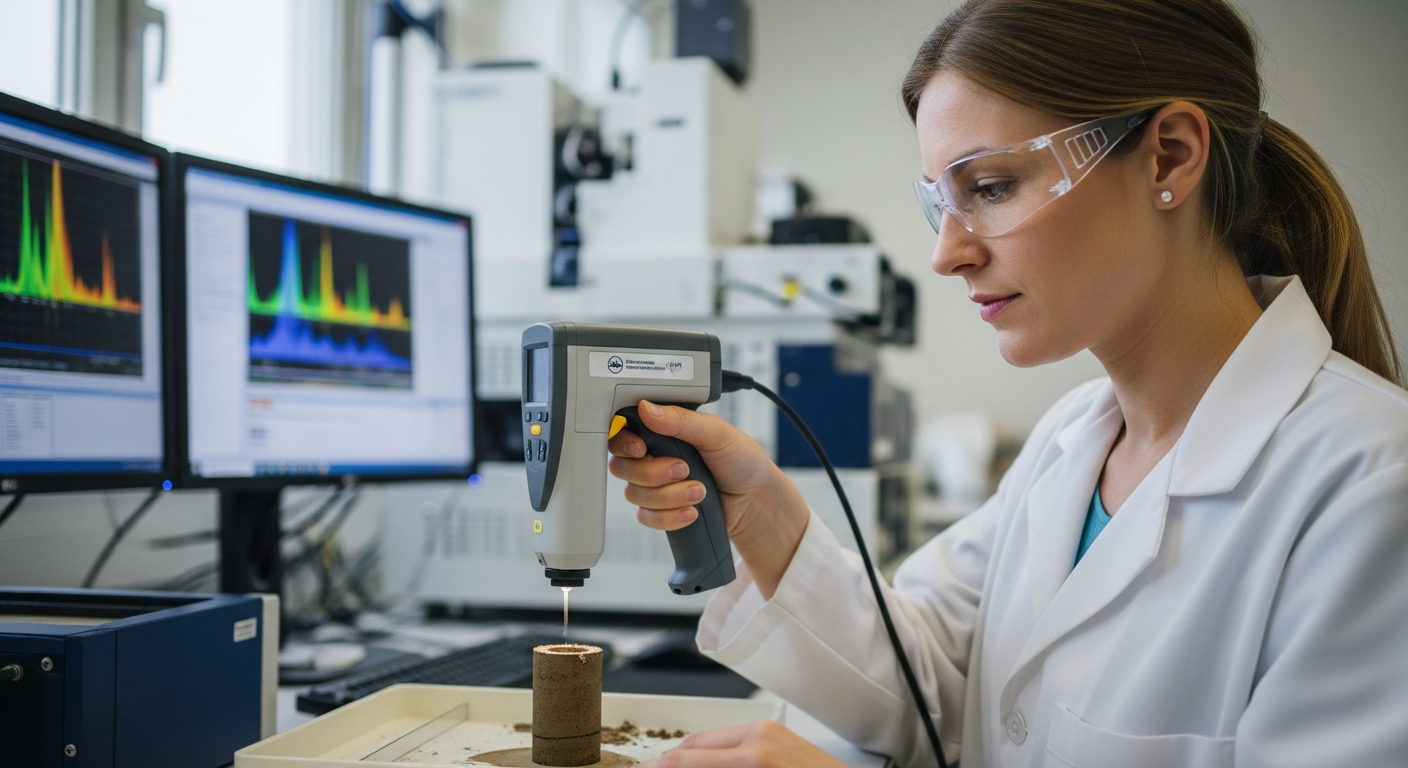
Soil spectroscopy offers a rapid and non-destructive method for assessing soil nutrient levels. This technology involves measuring the interaction of electromagnetic radiation with soil samples.
Different soil components, such as organic matter, minerals, and nutrients, absorb and reflect light at different wavelengths. By analyzing the spectral signatures, researchers and farmers can infer the composition and nutrient content of the soil.
There are two main types of spectroscopy used in agriculture: visible near-infrared (Vis-NIR) spectroscopy and mid-infrared (MIR) spectroscopy. Vis-NIR spectroscopy is sensitive to organic matter and certain minerals, while MIR spectroscopy provides more detailed information about soil composition, including clay content and specific nutrient concentrations.
To use soil spectroscopy effectively, it is essential to develop calibration models that relate spectral data to laboratory measurements of soil properties. These models are typically developed using statistical techniques such as partial least squares regression (PLSR), which can handle complex datasets and identify the most important wavelengths for predicting nutrient levels.
The process of soil spectroscopy begins with collecting soil samples from the field. These samples are then air-dried and ground to a fine powder to ensure uniformity.
The prepared samples are then placed in a spectrometer, which emits electromagnetic radiation and measures the reflected or absorbed light. The resulting spectral data is analyzed using calibration models to predict the concentration of various nutrients, such as nitrogen, phosphorus, and potassium.
The accuracy of soil spectroscopy depends on several factors. These include the quality of the spectrometer, the preparation of the soil samples, and the accuracy of the calibration models.
Regular validation of the calibration models is essential to ensure that the results are reliable. Despite these challenges, soil spectroscopy offers a valuable tool for rapid and cost-effective soil analysis.
Developing Site-Specific Fertilizer Recommendations
Site-specific fertilizer recommendations are crucial for optimizing nutrient management and minimizing environmental impact. Traditional fertilizer recommendations are often based on average soil conditions across an entire field, which can lead to over- or under-fertilization in certain areas.
By using soil spectroscopy to assess nutrient levels at a high spatial resolution, farmers can develop fertilizer plans that are tailored to the specific needs of each area. This approach, known as precision fertilization, ensures that crops receive the right amount of nutrients at the right time, maximizing yield and minimizing waste.
| Nutrient | Deficiency Symptoms | Spectroscopic Indicators |
|---|---|---|
| Nitrogen (N) | Yellowing of older leaves, stunted growth | Decreased organic matter absorption in Vis-NIR |
| Phosphorus (P) | Purplish coloration of leaves, poor root development | Changes in MIR spectral features related to phosphate minerals |
| Potassium (K) | Marginal chlorosis and necrosis of leaves | Alterations in MIR spectral bands associated with clay minerals |
| Micronutrients (e.g., Iron, Zinc) | Interveinal chlorosis, distorted growth | Subtle changes in Vis-NIR spectra requiring advanced analysis |
To develop site-specific recommendations, spectroscopic data is combined with other information such as crop type, growth stage, and yield goals. This integrated approach allows farmers to make informed decisions about fertilizer application rates, timing, and placement.
Additionally, soil maps can be created that show the spatial variability of nutrient levels across the field. These maps can then be used to guide variable rate application technologies, ensuring that fertilizer is applied only where it is needed and in the appropriate amount.
The process of developing site-specific fertilizer recommendations involves several steps. First, soil samples are collected from different locations within the field, based on a grid or zone-based approach.
These samples are analyzed using soil spectroscopy to determine the concentration of key nutrients. The resulting data is then used to create nutrient maps, which show the spatial distribution of nutrient levels across the field.
These maps are combined with information about crop requirements and yield goals to develop fertilizer recommendations for each area of the field. The recommendations specify the type and amount of fertilizer to be applied, as well as the optimal timing and placement.
Finally, the fertilizer recommendations are implemented using variable rate application technology, which allows farmers to apply fertilizer at different rates across the field, based on the specific needs of each area.
Integrating Spectroscopic Data with Variable Rate Application
Variable rate application (VRA) is a technology that allows farmers to apply fertilizer at different rates across a field, based on site-specific needs. Integrating spectroscopic data with VRA systems can significantly improve the efficiency and effectiveness of nutrient management.
The process typically involves collecting soil spectra using either handheld or tractor-mounted sensors. The spectral data is then processed to generate nutrient maps, which are uploaded to the VRA controller.
The VRA controller uses the nutrient maps to adjust the fertilizer application rate in real-time as the equipment moves through the field. This ensures that areas with low nutrient levels receive more fertilizer, while areas with high nutrient levels receive less, or none at all.
There are several types of VRA systems available, including map-based systems and sensor-based systems. Map-based systems rely on pre-generated nutrient maps, while sensor-based systems use real-time data from soil sensors to adjust the application rate on the go.
Sensor-based systems offer the advantage of being able to respond to changes in soil conditions in real-time, but they can be more expensive and complex to implement. Regardless of the type of system used, integrating spectroscopic data with VRA technology can lead to significant improvements in nutrient use efficiency and yield.
The integration of spectroscopic data with VRA systems requires careful planning and execution. First, it is important to select the appropriate VRA system for the specific needs of the farm.
Factors to consider include the size of the farm, the type of crops grown, and the budget available. Next, it is necessary to develop accurate nutrient maps using soil spectroscopy.
This involves collecting a sufficient number of soil samples and analyzing them using appropriate calibration models. The nutrient maps are then uploaded to the VRA controller, which is programmed to adjust the fertilizer application rate based on the nutrient levels in each area of the field.
Finally, the VRA system is calibrated and tested to ensure that it is applying fertilizer accurately. Regular monitoring and maintenance of the VRA system are essential for ensuring optimal performance.
Benefits of Optimized Fertilizer Use
Optimized fertilizer use offers a multitude of benefits for farmers, the environment, and society as a whole. By tailoring fertilizer applications to the specific needs of crops, farmers can increase yields and improve crop quality.
This leads to higher profits and more sustainable agricultural practices. Reducing over-fertilization also minimizes nutrient runoff and leaching, which protects water quality and prevents harmful algal blooms.
- Reduced environmental pollution
- Improved water and air quality
- Increased crop yields
- Higher nutrient use efficiency
- Cost savings on fertilizer inputs
- Enhanced soil health
Furthermore, optimized fertilizer use can reduce greenhouse gas emissions associated with fertilizer production and application. By using less fertilizer and improving nutrient uptake by crops, farmers can reduce their carbon footprint and contribute to climate change mitigation.
Finally, optimized fertilizer use promotes soil health by reducing the buildup of excess nutrients and salts. This leads to improved soil structure, water infiltration, and microbial activity, all of which are essential for long-term soil productivity.
The economic benefits of optimized fertilizer use are also significant. By reducing fertilizer waste, farmers can save money on input costs.
Increased crop yields and improved crop quality can also lead to higher profits. The environmental benefits of optimized fertilizer use extend beyond water and air quality.
Reduced nutrient runoff can also protect biodiversity and ecosystem services. Healthy soil supports a diverse community of microorganisms, which play a crucial role in nutrient cycling and plant health.
By promoting soil health, optimized fertilizer use can contribute to a more resilient and sustainable agricultural system.
Challenges and Considerations
While soil spectroscopy and precision fertilization offer numerous benefits, there are also several challenges and considerations to keep in mind. One of the main challenges is the initial investment in equipment and technology.
Spectrometers, VRA systems, and data processing software can be expensive, which may be a barrier for some farmers. Another consideration is the need for expertise in data analysis and interpretation.
Developing accurate calibration models and interpreting spectral data requires specialized knowledge and skills. Farmers may need to invest in training or hire consultants to help them with this aspect of precision agriculture.
Additionally, the accuracy of soil spectroscopy depends on the quality of the calibration models and the representativeness of the soil samples. It is important to collect a sufficient number of samples and to ensure that they are representative of the spatial variability in the field.
Finally, the effectiveness of precision fertilization depends on the accuracy of the VRA system and the ability to apply fertilizer uniformly at the desired rate. Regular calibration and maintenance of the equipment are essential for ensuring accurate application.
Data management is another important consideration. Soil spectroscopy generates large amounts of data, which need to be stored, processed, and analyzed effectively.
Farmers may need to invest in data management systems and software to handle this data. The scalability of soil spectroscopy and precision fertilization is also a consideration.
While these technologies can be effective on small and medium-sized farms, they may be more challenging to implement on large-scale agricultural operations. The availability of technical support and training is also crucial for the successful adoption of soil spectroscopy and precision fertilization.
Farmers need access to qualified technicians and consultants who can provide assistance with equipment maintenance, data analysis, and fertilizer recommendations.
The Role of Nutrient Management in Sustainable Agriculture
Nutrient management plays a central role in promoting sustainable agriculture. Sustainable agriculture aims to produce food and fiber in a way that minimizes environmental impact, conserves natural resources, and supports the long-term health of ecosystems.
Efficient nutrient management is essential for achieving these goals. By optimizing fertilizer use, farmers can reduce nutrient pollution, conserve soil resources, and minimize greenhouse gas emissions.
Furthermore, nutrient management can improve crop resilience to climate change. Healthy, well-nourished crops are better able to withstand drought, heat stress, and other environmental challenges.
Integrated nutrient management strategies, which combine soil testing, crop monitoring, and precision fertilization, are key to achieving sustainable agricultural practices. These strategies also promote biodiversity and ecosystem services by reducing the negative impacts of agriculture on the surrounding environment.
Sustainable nutrient management also involves the use of alternative nutrient sources. These include organic fertilizers, such as compost and manure, as well as cover crops and nitrogen-fixing plants.
By diversifying nutrient sources, farmers can reduce their reliance on synthetic fertilizers and improve soil health. Crop rotation is another important component of sustainable nutrient management.
Rotating crops can help to improve soil fertility, reduce pest and disease pressure, and increase crop yields. Finally, sustainable nutrient management requires a holistic approach that considers the entire farming system.
This includes factors such as soil type, climate, crop type, and management practices. By taking a holistic approach, farmers can develop nutrient management strategies that are tailored to their specific needs and that promote long-term sustainability.
Case Studies: Successful Fertilizer Optimization Projects
Several successful projects have demonstrated the effectiveness of soil spectroscopy fertilizer optimization in real-world agricultural settings. In one study conducted in Iowa, researchers used Vis-NIR spectroscopy to assess soil nutrient levels in cornfields.
They developed site-specific fertilizer recommendations and implemented variable rate application. The results showed that precision fertilization increased corn yields by an average of 5% while reducing fertilizer use by 15%.
Another project in California focused on optimizing nitrogen management in vineyards. Researchers used aerial imagery and soil spectroscopy to assess nitrogen status in grapevines.
They developed nitrogen management plans that were tailored to the specific needs of different areas within the vineyard. The results showed that precision nitrogen management improved grape quality and reduced nitrogen leaching into groundwater.
A third case study in Brazil involved using MIR spectroscopy to assess soil fertility in sugarcane fields. Researchers developed calibration models for predicting nutrient levels and used this information to guide fertilizer applications.
The results showed that precision fertilization increased sugarcane yields and improved nutrient use efficiency. These case studies demonstrate the potential of soil spectroscopy fertilizer optimization to improve agricultural productivity and sustainability in a variety of cropping systems.
In another case study in Europe, researchers used soil spectroscopy to optimize fertilizer use in wheat fields. They found that precision fertilization reduced fertilizer use by 20% without compromising yield.
This resulted in significant cost savings for farmers and reduced environmental pollution. A project in Africa focused on using soil spectroscopy to improve nutrient management in smallholder farms.
Researchers developed low-cost soil spectroscopy techniques and provided training to farmers on how to use the technology. The results showed that soil spectroscopy improved nutrient use efficiency and increased crop yields in smallholder farms.
These case studies highlight the potential of soil spectroscopy fertilizer optimization to improve agricultural productivity and sustainability in diverse agricultural settings.
Future Trends in Soil Spectroscopy and Precision Fertilization
The field of soil spectroscopy and precision fertilization is constantly evolving, with new technologies and approaches emerging all the time. One trend is the development of more advanced spectroscopic sensors that can measure a wider range of soil properties.
These sensors will provide more detailed information about soil composition and nutrient status, allowing for more precise fertilizer recommendations. Another trend is the integration of soil spectroscopy with other data sources, such as remote sensing and weather data.
This integrated approach will provide a more comprehensive understanding of crop needs and environmental conditions, leading to even more efficient nutrient management. The rise of artificial intelligence (AI) and machine learning (ML) will also play a significant role in the future of soil spectroscopy.
AI and ML algorithms can be used to develop more accurate calibration models, to automate data analysis, and to optimize fertilizer recommendations. These advancements will make precision fertilization more accessible and effective for farmers around the world.
Another future trend is the development of portable and handheld soil spectrometers. These devices will allow farmers to conduct soil analysis in the field, without the need for laboratory testing.
This will enable them to make more informed decisions about fertilizer applications in real-time. The use of drones and unmanned aerial vehicles (UAVs) for soil spectroscopy is also expected to increase in the future.
Drones can be equipped with spectroscopic sensors to collect data over large areas, providing a more comprehensive assessment of soil variability. Finally, the development of cloud-based platforms for data analysis and sharing will facilitate the adoption of soil spectroscopy and precision fertilization.
These platforms will provide farmers with access to the latest research and best practices, as well as tools for data analysis and decision support.
Conclusion
Soil spectroscopy offers a powerful tool for optimizing fertilizer use and promoting sustainable agriculture. By providing rapid and cost-effective assessment of soil nutrient levels, this technology enables farmers to tailor fertilizer applications to the specific needs of their crops.
This leads to increased yields, reduced environmental impact, and improved nutrient use efficiency. Integrating spectroscopic data with variable rate application technologies further enhances the benefits of precision fertilization.
While there are challenges and considerations associated with implementing these technologies, the potential benefits are significant. As technology continues to advance, soil spectroscopy and precision fertilization will become even more accessible and effective, playing a crucial role in ensuring food security and environmental sustainability.
Embracing these innovative approaches is essential for creating a more resilient and sustainable agricultural system. By adopting soil spectroscopy fertilizer optimization, farmers can contribute to a healthier planet and a more prosperous future.
The future of agriculture depends on our ability to adopt sustainable practices that protect our natural resources and ensure food security for future generations. Soil spectroscopy and precision fertilization are key components of this sustainable future.
By investing in these technologies and promoting their adoption, we can create a more resilient and sustainable agricultural system that benefits both farmers and the environment. The time to act is now.
Let us embrace the power of soil spectroscopy and precision fertilization to create a brighter future for agriculture.