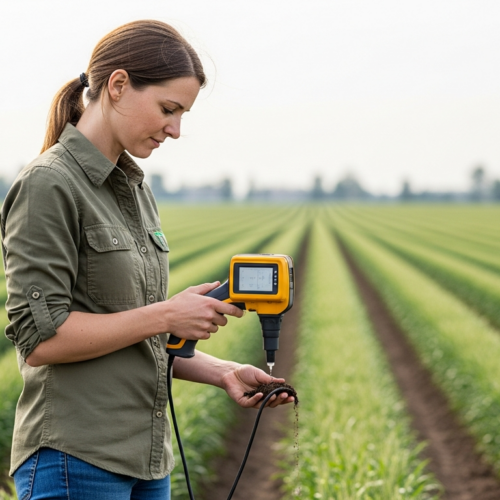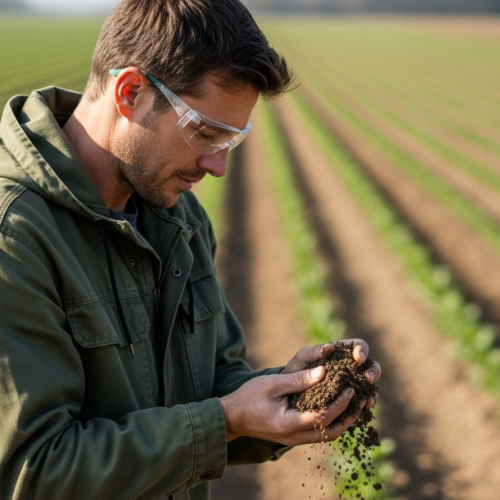

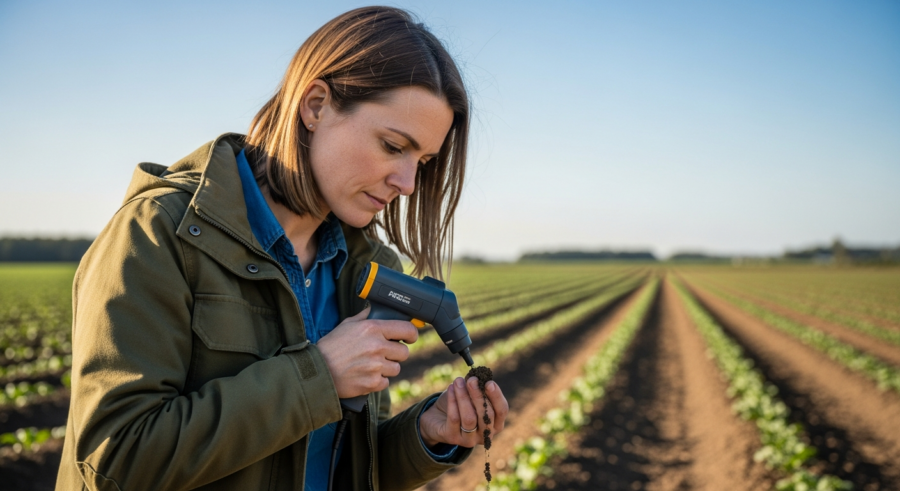
The health of our planet depends on our ability to understand and manage carbon levels in the soil. Soil is one of the largest carbon reservoirs on Earth, playing a significant role in regulating atmospheric carbon dioxide.
Measuring and monitoring soil carbon is essential for developing strategies for climate change mitigation and promoting sustainable agricultural practices.
Traditional methods of soil analysis can be time-consuming and expensive, making it difficult to conduct large-scale assessments. However, a promising alternative has emerged: soil spectroscopy carbon sequestration, offering a rapid and cost-effective way to assess soil health and carbon content.
This innovative approach leverages the interaction of light with soil components to infer the amount of carbon present. It’s a game-changer for environmental monitoring and sustainable agriculture.
This guide will provide a beginner’s overview of how soil spectroscopy is used to measure carbon sequestration. We will discuss the principles behind the technology, its benefits, and how it can be used to improve carbon management in agriculture.
By understanding the power of soil spectroscopy, we can make informed decisions about land management and contribute to a healthier planet. This guide aims to equip you with the knowledge needed to appreciate and potentially implement this technology.
Understanding Carbon Sequestration in Soil
Carbon sequestration refers to the process of capturing and storing atmospheric carbon dioxide in various reservoirs, including soil. Soil organic carbon (SOC) is the carbon component of organic compounds in the soil, originating from the decomposition of plant and animal residues, root biomass, and microbial biomass.
Think of it as nature’s way of locking away carbon, preventing it from contributing to greenhouse gas emissions.
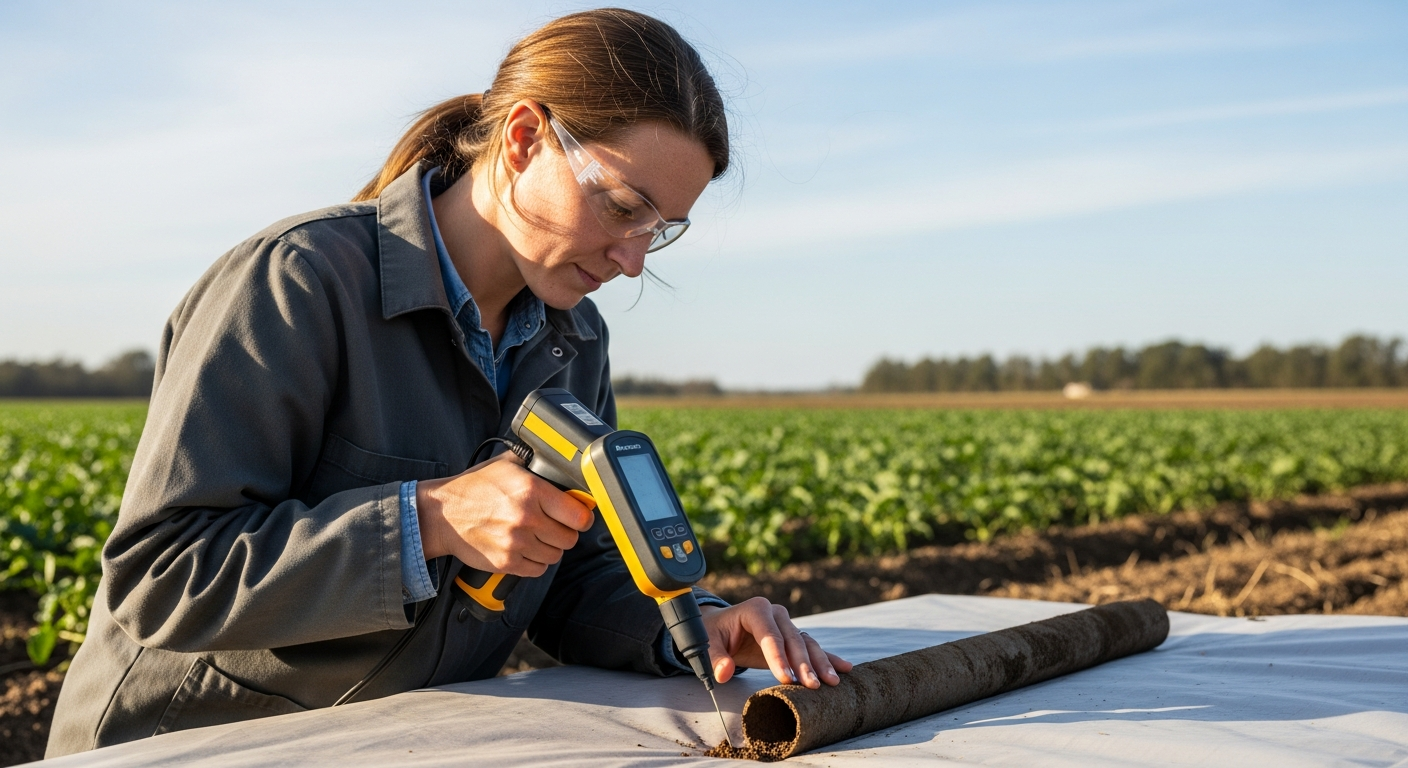
Soils act as a major carbon sink, storing more carbon than the atmosphere and terrestrial vegetation combined. The ability of soil to store carbon depends on various factors, including climate, vegetation type, soil management practices, and soil type.
This immense carbon storage capacity highlights the importance of soil in mitigating climate change. The balance of carbon entering and leaving the soil determines its overall carbon sequestration potential.
Agricultural practices can significantly impact soil carbon levels. Intensive cultivation, excessive tillage, and monoculture cropping systems can lead to the depletion of soil organic carbon stocks.
These practices disrupt the soil structure and accelerate the decomposition of organic matter, releasing carbon back into the atmosphere. The consequences can be detrimental to both soil health and the environment.
Conversely, sustainable agricultural practices, such as conservation tillage, cover cropping, and crop rotation, can enhance carbon sequestration in soil. These practices promote the accumulation of organic matter, improve soil structure, and enhance soil fertility, all of which contribute to increased carbon storage.
These methods not only benefit the environment but also improve the long-term productivity and resilience of agricultural systems. They represent a win-win scenario for farmers and the planet.
Ultimately, increasing carbon sequestration in soil requires a shift towards more sustainable and regenerative agricultural practices. This involves adopting farming techniques that minimize soil disturbance, maximize organic matter inputs, and promote biodiversity.
By prioritizing soil health, we can unlock the full potential of soil as a carbon sink and contribute to a more sustainable future. This requires a collaborative effort from farmers, researchers, and policymakers.
How Soil Spectroscopy Measures Soil Organic Carbon
Soil spectroscopy is a technique that uses the interaction of electromagnetic radiation with soil to determine its chemical and physical properties. When electromagnetic radiation, such as visible or near-infrared light, interacts with soil, certain wavelengths are absorbed, reflected, or transmitted depending on the soil’s composition.
It’s like shining a light on soil and reading the story it tells through the patterns of light absorption and reflection. Different soil components have unique spectral signatures.
The resulting spectral signature, or reflectance pattern, provides information about the soil’s organic and inorganic components. Soil organic carbon has distinct spectral features, particularly in the visible and near-infrared regions of the electromagnetic spectrum.
These spectral features act like fingerprints, allowing us to identify and quantify the amount of organic carbon present. The intensity of the spectral signal is directly related to the concentration of SOC.
By analyzing the spectral signature of a soil sample, it is possible to estimate the soil organic carbon content. This is achieved through the development of calibration models that relate spectral reflectance to soil organic carbon values obtained through traditional laboratory analysis.
These models essentially translate the spectral data into meaningful estimates of soil carbon levels. The accuracy of these models is crucial for reliable carbon monitoring.
These calibration models are typically developed using statistical techniques, such as partial least squares regression (PLSR), to establish a relationship between spectral data and soil organic carbon measurements. Once the calibration model is established, it can be used to predict soil organic carbon content from spectral data alone, without the need for extensive laboratory analysis.
This significantly reduces the time and cost associated with soil carbon analysis. It also allows for the rapid assessment of large numbers of samples.
The process typically involves collecting a representative set of soil samples, analyzing them using both traditional laboratory methods and spectroscopy, and then using the data to train the calibration model. The model is then validated using an independent set of samples to ensure its accuracy and reliability.
The power of soil spectroscopy lies in its ability to provide rapid, non-destructive, and cost-effective estimates of soil organic carbon. This information is essential for understanding soil health, managing agricultural practices, and monitoring carbon sequestration efforts.
The Benefits of Using Spectroscopy for Carbon Monitoring
Compared to traditional laboratory methods, soil spectroscopy offers several advantages for carbon monitoring. Spectroscopy is a rapid and cost-effective technique, allowing for the analysis of a large number of samples in a relatively short amount of time.
This speed advantage makes it ideal for large-scale surveys and projects with tight deadlines. The reduced cost per sample also makes it more accessible to researchers and practitioners.
This makes it particularly useful for large-scale soil surveys and monitoring programs. Soil spectroscopy is also a non-destructive technique, meaning that the soil sample is not altered or consumed during the analysis.
The non-destructive nature of the technique allows for further analysis of the same sample using other methods. This can provide a more comprehensive understanding of soil properties.
| Benefit | Description | Advantage |
|---|---|---|
| Speed | Rapid analysis of samples | Allows for large-scale surveys |
| Cost-effectiveness | Lower cost per sample | Reduces overall monitoring expenses |
| Non-destructive | Sample is not altered | Enables further analysis if needed |
| High throughput | Analysis of many samples quickly | Provides comprehensive data sets |
These advantages make soil spectroscopy a valuable tool for a wide range of applications. From monitoring soil health in agricultural fields to assessing carbon sequestration in forests, spectroscopy can provide valuable insights.
Furthermore, the ease of use of modern spectrometers allows for field-based measurements, providing real-time data on soil carbon levels. This can be particularly useful for adaptive management strategies.
The data generated by soil spectroscopy can be used to create detailed maps of soil carbon distribution, allowing for targeted interventions to improve soil health and enhance carbon sequestration. These maps can be used to guide fertilizer application, irrigation, and other management practices.
In summary, soil spectroscopy offers a powerful combination of speed, cost-effectiveness, and non-destructive analysis, making it an indispensable tool for carbon monitoring and sustainable land management. Its ability to provide rapid and reliable data is transforming our understanding of soil carbon dynamics.
Factors Affecting Carbon Sequestration in Agricultural Soils
Several factors influence the rate and extent of carbon sequestration in agricultural soils. Climate plays a significant role, with temperature and precipitation affecting the decomposition rate of organic matter and plant productivity.
These climatic variables directly impact the balance between carbon inputs and outputs in the soil. Understanding these relationships is crucial for predicting carbon sequestration potential.
Warm and humid climates generally favor rapid decomposition, while cooler and drier climates slow down decomposition rates. Soil type also influences carbon sequestration, with soils high in clay content tending to store more carbon than sandy soils.
Clay soils provide greater protection for organic matter, reducing its susceptibility to decomposition. Sandy soils, on the other hand, tend to be more porous and have lower organic matter content.
This is because clay particles have a large surface area that can bind with organic matter, protecting it from decomposition. Soil management practices are also crucial in determining carbon sequestration potential.
The way we manage our soils can either enhance or diminish their capacity to store carbon. Sustainable management practices are key to unlocking the full potential of soil as a carbon sink.
Practices such as no-till farming, cover cropping, and crop rotation can enhance carbon sequestration by reducing soil disturbance, increasing organic matter inputs, and improving soil structure. The type of vegetation grown in agricultural systems also affects carbon sequestration.
Different crops have different root systems and biomass production rates, which influence the amount of carbon that is returned to the soil. Choosing the right crops can significantly enhance carbon sequestration.
For example, perennial crops tend to sequester more carbon than annual crops due to their longer growing season and extensive root systems. Similarly, cover crops can add significant amounts of organic matter to the soil, improving its carbon sequestration potential.
Ultimately, maximizing carbon sequestration in agricultural soils requires a holistic approach that considers climate, soil type, management practices, and vegetation type. By understanding these factors, we can develop strategies to enhance carbon storage and improve soil health.
Using Spectroscopy Data to Improve Carbon Management Practices
Soil spectroscopy data can be used to inform and improve carbon management practices in agriculture. By providing rapid and cost-effective assessments of soil organic carbon levels, spectroscopy can help farmers and land managers identify areas where carbon sequestration can be enhanced.
This targeted approach allows for the efficient allocation of resources and the implementation of tailored management strategies. It’s about using data to make smarter decisions.
For example, spectroscopy can be used to monitor the impact of different agricultural practices on soil carbon stocks. This information can then be used to optimize management practices to maximize carbon sequestration and improve soil health.
By tracking changes in soil carbon levels over time, farmers can assess the effectiveness of their management practices and make adjustments as needed. This adaptive management approach ensures continuous improvement.
Spectroscopy data can also be used to create soil carbon maps, which can be used to guide targeted management interventions. These maps can help identify areas with low soil organic carbon levels that may benefit from practices such as cover cropping or compost application.
These maps provide a visual representation of soil carbon distribution, making it easier to identify areas that require attention. They can also be used to track the progress of carbon sequestration efforts.
In addition, spectroscopy can be used to verify and monitor carbon sequestration projects. By providing accurate and reliable measurements of soil carbon stocks, spectroscopy can help ensure that carbon credits are accurately assigned and that carbon sequestration projects are achieving their intended goals.
This verification process is essential for building trust and ensuring the integrity of carbon markets. It also provides assurance to investors and stakeholders that carbon sequestration projects are delivering real benefits.
The use of spectroscopy data can also help to optimize fertilizer application, reducing the risk of nutrient runoff and minimizing environmental impacts. By understanding the nutrient status of the soil, farmers can apply fertilizers more efficiently.
In conclusion, soil spectroscopy data provides valuable information that can be used to improve carbon management practices, enhance soil health, and verify carbon sequestration efforts. Its ability to provide rapid, cost-effective, and reliable data is transforming the way we manage our soils.
Practical Steps for Implementing Soil Spectroscopy
Implementing soil spectroscopy in agricultural carbon management requires a few key steps. First, collect representative soil samples from the area of interest, ensuring a good spatial distribution.
Proper sampling is critical for obtaining accurate and reliable data. Consider using a grid-based sampling approach to ensure adequate coverage.
Air-dry the samples, grind them to a consistent particle size, and then scan them using a portable or laboratory-based spectrometer. Develop or acquire calibration models that relate spectral reflectance to soil organic carbon content, ideally using local soil samples and conditions.
Calibration models are essential for translating spectral data into meaningful estimates of soil carbon. The accuracy of these models is crucial for reliable carbon monitoring.
- Collect representative soil samples
- Air-dry and grind the samples
- Scan samples with a spectrometer
- Develop or acquire calibration models
- Validate model accuracy
Each step is crucial to ensure the accuracy and reliability of the results. Skipping or compromising on any of these steps can lead to inaccurate estimations of soil carbon.
When collecting soil samples, be sure to follow established protocols to minimize contamination and ensure consistency. Label each sample clearly and record its location accurately.
When scanning the samples with a spectrometer, follow the manufacturer’s instructions carefully to ensure accurate and consistent measurements. Calibrate the spectrometer regularly to maintain its accuracy.
When developing or acquiring calibration models, consider using a local dataset that is representative of the soil types and conditions in your area. Validate the model using an independent dataset to ensure its accuracy and reliability.
By following these practical steps, you can successfully implement soil spectroscopy in your agricultural carbon management program and obtain valuable data for informed decision-making. This will help you to optimize your management practices and enhance carbon sequestration in your soils.
Challenges and Opportunities in Soil Carbon Monitoring
While soil spectroscopy offers numerous advantages for carbon monitoring, there are also some challenges that need to be addressed. One challenge is the development of accurate and robust calibration models.
The accuracy of these models is critical for reliable carbon monitoring, and their development can be complex and time-consuming. Addressing this challenge is essential for widespread adoption of soil spectroscopy.
Calibration models can be affected by factors such as soil type, climate, and vegetation cover, making it necessary to develop region-specific or site-specific models. Another challenge is the need for standardized protocols for soil sampling and spectral data acquisition.
Standardized protocols are essential for ensuring consistency and comparability of data across different studies and regions. The lack of such protocols can hinder the widespread adoption of soil spectroscopy.
Variations in sampling methods and instrument calibration can lead to inconsistencies in soil carbon measurements. Despite these challenges, there are also significant opportunities for advancing soil carbon monitoring using spectroscopy.
These opportunities include the development of new and improved spectrometers, the integration of spectroscopy with other technologies, and the growing demand for carbon credits.
The development of new and improved spectrometers, coupled with advances in data processing and machine learning techniques, is paving the way for more accurate and efficient soil carbon assessments. There is also growing interest in integrating spectroscopy data with other data sources, such as remote sensing data and soil maps, to provide a more comprehensive picture of soil carbon dynamics.
This integration can provide a more holistic understanding of soil carbon dynamics and improve the accuracy of carbon monitoring efforts. Remote sensing data can provide information on vegetation cover and land use, while soil maps can provide information on soil type and properties.
The increasing demand for carbon credits is also creating new opportunities for soil spectroscopy. As carbon markets develop, there will be a growing need for accurate and reliable methods for verifying carbon sequestration projects.
Soil spectroscopy can play a key role in this verification process, providing the data needed to ensure that carbon credits are accurately assigned and that carbon sequestration projects are delivering real benefits. By addressing the challenges and capitalizing on the opportunities, we can unlock the full potential of soil spectroscopy for carbon monitoring and sustainable land management.
Case Studies: Spectroscopy in Action
Several studies have demonstrated the effectiveness of soil spectroscopy for carbon monitoring in various agricultural systems. A study in the Midwestern United States used spectroscopy to assess the impact of different tillage practices on soil organic carbon.
This study provided valuable insights into the effects of tillage on soil carbon sequestration. It highlighted the potential of no-till farming to enhance carbon storage in agricultural soils.
The results showed that no-till farming significantly increased soil organic carbon levels compared to conventional tillage. Another study in Brazil used spectroscopy to monitor soil carbon changes in sugarcane plantations.
This study demonstrated the potential of sustainable management practices to enhance carbon sequestration in sugarcane plantations. It provided evidence that sugarcane production can be environmentally sustainable.
The study found that the adoption of sustainable management practices, such as crop residue retention and green manure application, enhanced carbon sequestration in the soil. In Australia, researchers used spectroscopy to map soil carbon stocks across a large agricultural region.
This study showcased the ability of spectroscopy to provide detailed information on soil carbon distribution across large areas. It demonstrated the potential of spectroscopy for guiding targeted management interventions.
The resulting soil carbon map was used to identify areas with high carbon sequestration potential and to guide targeted management interventions. These case studies demonstrate the practical application of soil spectroscopy for carbon monitoring and its potential to inform sustainable agricultural practices.
These examples highlight the versatility of soil spectroscopy and its applicability to a wide range of agricultural systems. They also underscore the importance of using spectroscopy to inform decision-making in sustainable agriculture.
By learning from these case studies, farmers and land managers can gain valuable insights into how to use soil spectroscopy to improve carbon management practices and enhance soil health. This will contribute to a more sustainable and resilient agricultural system.
The Future of Soil Spectroscopy Carbon Sequestration
The future of soil spectroscopy carbon sequestration looks promising, with ongoing research and development efforts aimed at improving the accuracy, efficiency, and accessibility of the technology. Advances in sensor technology are leading to the development of smaller, more portable, and more affordable spectrometers.
These advancements will make it easier for farmers and land managers to conduct on-site soil carbon assessments. They will also facilitate the widespread adoption of soil spectroscopy in developing countries.
This will make it easier for farmers and land managers to conduct on-site soil carbon assessments. The integration of spectroscopy with other technologies, such as drones and satellites, is also opening up new possibilities for large-scale soil carbon monitoring.
This integration will enable the rapid and cost-effective assessment of soil carbon stocks over large areas. It will also facilitate the monitoring of carbon sequestration trends over time.
Drones equipped with hyperspectral cameras can capture high-resolution spectral data over large areas, providing detailed information about soil carbon variability. Satellite-based sensors can provide regional-scale soil carbon estimates, allowing for the monitoring of carbon sequestration trends over time.
These technologies will provide valuable data for informing carbon management practices and verifying carbon sequestration projects. They will also contribute to a better understanding of soil carbon dynamics at regional and global scales.
As the demand for carbon credits and carbon sequestration projects grows, soil spectroscopy is poised to play an increasingly important role in verifying and monitoring carbon sequestration efforts. The technology will help to ensure that carbon credits are accurately assigned and that carbon sequestration projects are delivering their intended benefits.
This will build trust in carbon markets and encourage greater investment in carbon sequestration projects. It will also contribute to a more sustainable and resilient agricultural system.
The development of new and improved calibration models, coupled with advances in data processing and machine learning techniques, will further enhance the accuracy and efficiency of soil spectroscopy. This will make it an even more valuable tool for carbon monitoring and sustainable land management.
In conclusion, the future of soil spectroscopy carbon sequestration is bright, with ongoing research and development efforts paving the way for more accurate, efficient, and accessible technologies. This will contribute to a more sustainable and resilient agricultural system and help to mitigate climate change.
Conclusion
Soil spectroscopy offers a powerful tool for measuring and monitoring carbon sequestration in agricultural soils. Its speed, cost-effectiveness, and non-destructive nature make it an attractive alternative to traditional laboratory methods.
This makes it a valuable asset for farmers, researchers, and policymakers alike. Its potential to revolutionize soil carbon monitoring is immense.
By providing rapid and reliable assessments of soil organic carbon levels, spectroscopy can help farmers and land managers improve carbon management practices and promote sustainable agriculture. As the technology continues to evolve and become more accessible, it is poised to play a key role in mitigating climate change and ensuring the long-term health of our soils.
Embracing soil spectroscopy is not just about adopting a new technology; it’s about embracing a new way of thinking about soil management. It’s about recognizing the importance of soil as a carbon sink and taking proactive steps to enhance its carbon sequestration potential.