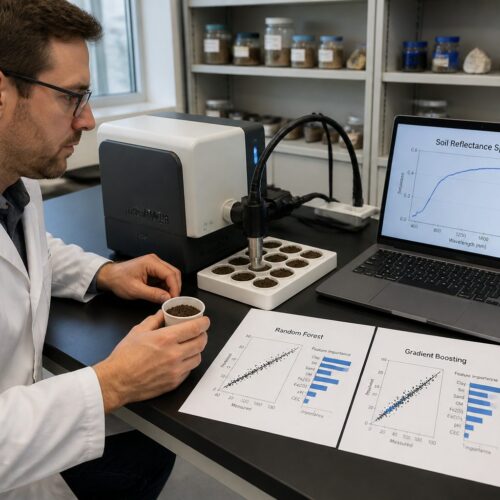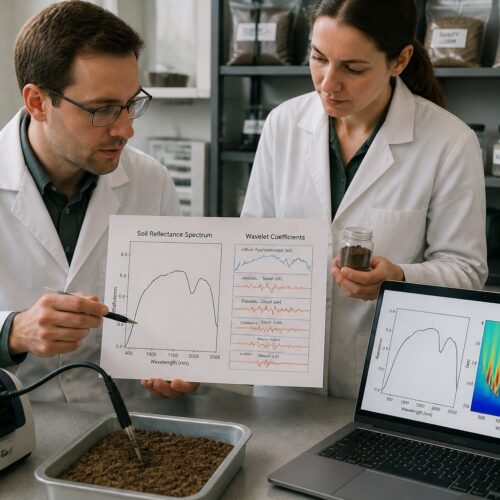

Precision agriculture relies on detailed soil analysis to optimize crop yields and resource management. Soil spectroscopy offers a rapid and non-destructive method for assessing soil properties. Among the various analytical techniques, differential scanning calorimetry soil stands out for its ability to provide unique insights into the thermal behavior of soil components.
This method helps in understanding the composition and stability of soil organic matter and minerals. By carefully analyzing the heat flow associated with phase transitions and chemical reactions, we can gain valuable information about soil health and fertility.
In this article, we will explore the principles of differential scanning calorimetry (DSC) and its applications in soil science. We’ll also discuss how DSC can be used to study soil organic matter, minerals, and overall soil thermal properties, providing a comprehensive guide for researchers and practitioners in precision agriculture.
Exploring Differential Scanning Calorimetry (DSC)
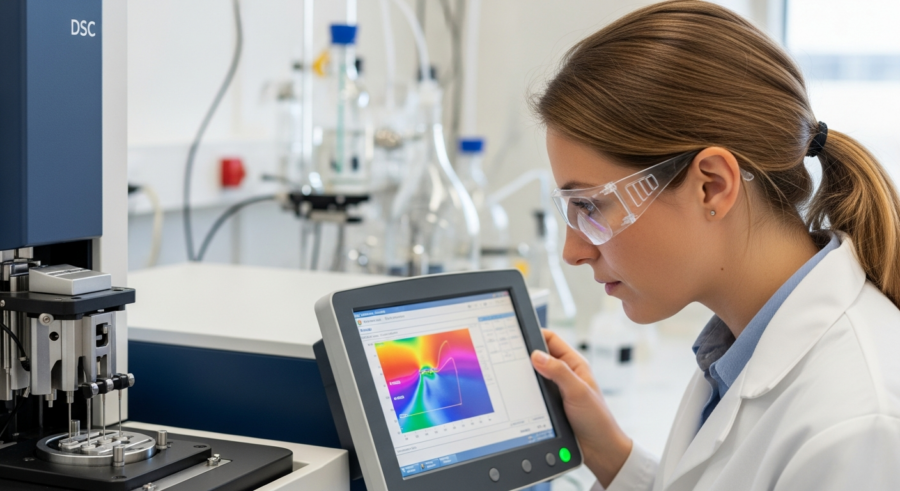
Differential scanning calorimetry (DSC) is a thermoanalytical technique that measures the heat flow required to increase the temperature of a sample and a reference at a controlled rate. The basic DSC principles involve comparing the heat absorbed or released by a sample to that of an inert reference material as both are subjected to the same temperature program.
This comparison allows for the identification of thermal transitions, such as melting, crystallization, glass transitions, and chemical reactions. The resulting data provides quantitative information about the energetics of these processes, making DSC a valuable tool for characterizing materials.
DSC operates by maintaining the sample and reference at nearly the same temperature throughout the experiment. When the sample undergoes a thermal transition, such as melting, it requires more or less heat than the reference to maintain the same temperature.
This difference in heat flow is measured and recorded as a function of temperature or time. The resulting DSC curve provides information about the temperature at which the transition occurs and the amount of energy involved.
DSC is a highly sensitive technique, capable of detecting even subtle changes in heat flow. This sensitivity is crucial for analyzing complex materials like soil, where numerous thermal events can occur simultaneously.
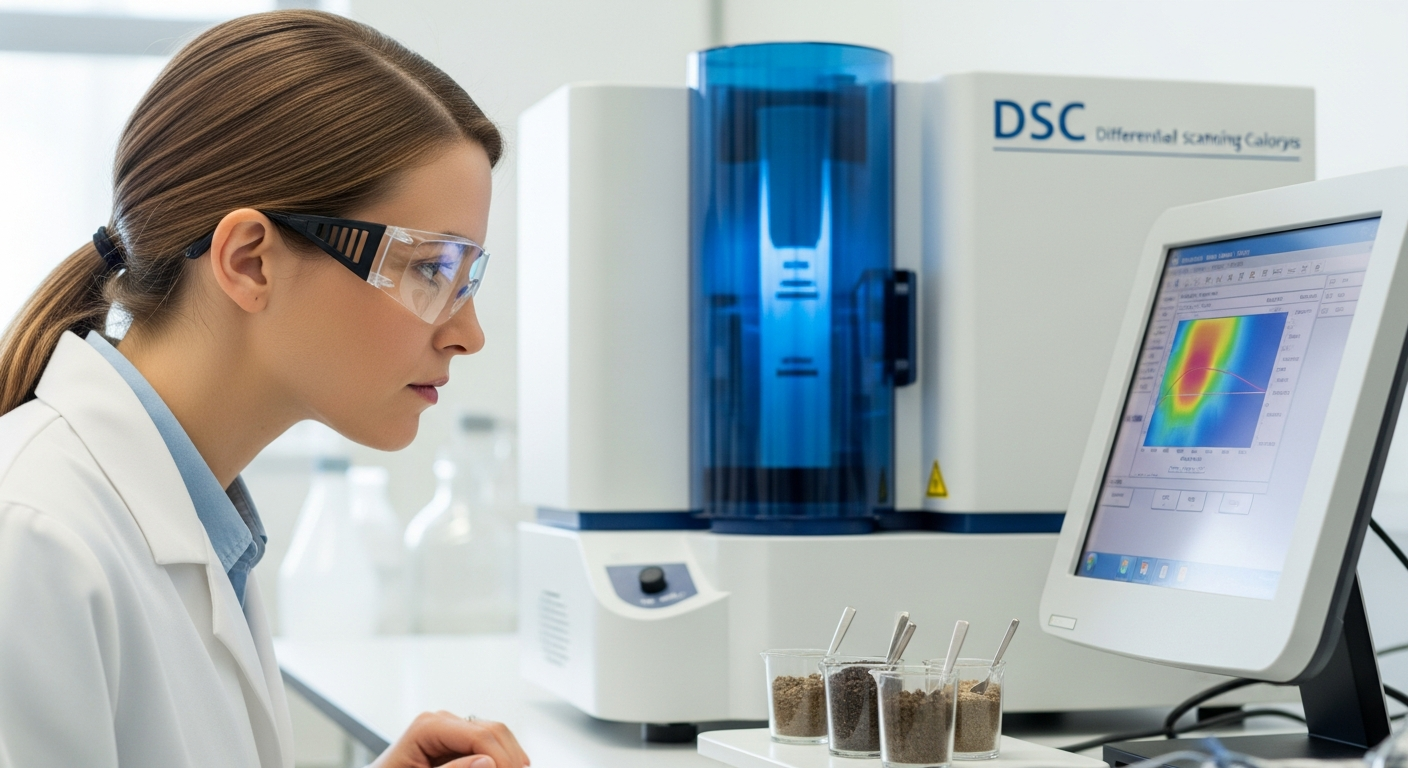
The instrument itself consists of a sample holder, a reference holder, and a heating system, all enclosed within a controlled environment. Precise temperature control is essential for accurate measurements.
The data obtained from DSC experiments is typically presented as a graph, with temperature on the x-axis and heat flow on the y-axis. Peaks on the graph indicate thermal transitions, with the direction of the peak indicating whether the transition is endothermic (heat absorbed) or exothermic (heat released).
The area under the peak is proportional to the enthalpy change associated with the transition, providing quantitative information about the energy involved. Careful calibration of the DSC instrument is necessary to ensure accurate and reliable results.
Different heating rates can be used to influence the resolution and sensitivity of the DSC measurements. Slower heating rates generally provide better resolution, allowing for the separation of closely spaced thermal events.
However, slower heating rates also increase the time required for the experiment. The choice of heating rate depends on the specific application and the characteristics of the sample being analyzed.
How DSC Works for Analyzing Soil Thermal Properties
DSC is particularly useful for analyzing soil thermal properties because it can detect changes in heat flow associated with various soil components. These components include organic matter, minerals, and water. By monitoring these changes, DSC can provide insights into soil composition and behavior under different thermal conditions.
When applied to soil samples, DSC measures the heat flow associated with phase transitions and chemical reactions that occur as the soil is heated or cooled. For example, the decomposition of soil organic matter releases heat, which is detected as an exothermic peak in the DSC curve.
Similarly, the melting of ice or the evaporation of water absorbs heat, resulting in endothermic peaks. The temperatures and magnitudes of these peaks provide information about the types and amounts of organic matter, minerals, and water present in the soil.
The thermal analysis data obtained from DSC can be used to characterize soil properties such as thermal stability, heat capacity, and thermal conductivity. These properties are important for understanding how soil responds to temperature changes in the environment and how it affects plant growth and nutrient cycling.
The exothermic peaks associated with soil organic matter decomposition can be further analyzed to determine the different fractions of organic matter present. For example, labile organic matter, which is easily decomposed, will exhibit peaks at lower temperatures, while more stable organic matter will decompose at higher temperatures.
The shape and size of these peaks can provide information about the quality and quantity of organic matter in the soil. DSC can also be used to study the effects of different soil management practices on soil thermal properties.
For instance, the impact of tillage, fertilization, or irrigation on soil organic matter and mineral composition can be assessed by comparing DSC curves of soil samples from different treatments. This information can help optimize soil management practices for improved soil health and crop productivity.
The analysis of endothermic peaks related to water phase transitions can provide insights into soil water content and its distribution. The melting point and enthalpy of fusion of ice in the soil can be used to estimate the amount of frozen water and the pore size distribution.
This information is particularly relevant in cold regions, where soil freezing and thawing cycles can significantly impact soil structure and plant growth. DSC can also be used to identify and quantify different types of clay minerals in the soil.
Clay minerals exhibit characteristic thermal transitions, such as dehydroxylation and phase transformations, at specific temperatures. The identification and quantification of clay minerals can provide valuable information about soil fertility, water-holding capacity, and nutrient retention.
Preparing Soil Samples for DSC Analysis
Proper sample preparation is crucial for obtaining accurate and reliable DSC results. The first step involves collecting a representative soil sample from the field. This sample should be taken from multiple locations and depths to account for spatial variability.
Once collected, the soil sample needs to be processed to remove any large debris, such as rocks and plant roots. The sample is then air-dried or oven-dried at a low temperature (e.g., 40°C) to remove excess moisture.
| Sample Preparation Step | Description | Importance |
|---|---|---|
| Collection | Collect representative soil samples from multiple locations and depths. | Ensures sample is representative of the soil being studied. |
| Drying | Air-dry or oven-dry the soil sample at a low temperature (e.g., 40°C). | Removes excess moisture without altering the soil composition. |
| Grinding and Sieving | Grind the dried soil sample and sieve it to obtain a uniform particle size (e.g., < 2 mm). | Ensures uniform heat transfer during DSC analysis. |
| Weighing | Accurately weigh a small amount of the prepared soil sample (e.g., 5-10 mg) into a DSC pan. | Provides accurate quantitative data on thermal transitions. |
After drying, the soil sample is ground into a fine powder using a mortar and pestle or a ball mill. This grinding process ensures that the soil particles are uniform in size, which is important for consistent heat transfer during the DSC analysis.
Finally, a small amount of the prepared soil sample (typically 5-10 mg) is accurately weighed into a DSC pan. The DSC pan is usually made of aluminum or platinum and is designed to provide good thermal contact with the DSC instrument.
The drying process is critical to remove free water, which can interfere with the detection of other thermal events. However, it is important to avoid excessive heating, as this can alter the composition of the soil organic matter.
Air-drying is generally preferred over oven-drying, as it minimizes the risk of altering the soil sample. If oven-drying is necessary, the temperature should be carefully controlled and monitored.
The grinding process should be carried out carefully to avoid introducing contamination or altering the mineral structure of the soil. A clean mortar and pestle or ball mill should be used, and the grinding time should be minimized.
Sieving the soil sample after grinding helps to remove any remaining large particles and ensures a uniform particle size distribution. A sieve with a mesh size of 2 mm is commonly used for soil samples.
Accurate weighing of the soil sample is essential for quantitative analysis. An analytical balance with a precision of 0.1 mg or better should be used.
The DSC pan should be clean and dry before adding the soil sample. The sample should be evenly distributed in the pan to ensure good thermal contact with the instrument.
Using DSC to Study Soil Organic Matter and Minerals
DSC is a powerful tool for studying soil organic matter (SOM) because it can provide information about the thermal stability and composition of SOM. When soil is heated in a DSC instrument, the organic matter undergoes a series of decomposition reactions that release heat.
These reactions are typically observed as exothermic peaks in the DSC curve. The temperature and magnitude of these peaks can be used to identify different types of organic matter, such as labile carbon, humic acids, and fulvic acids.
For example, labile carbon, which is easily decomposed, typically exhibits exothermic peaks at lower temperatures (e.g., 200-300°C). Humic acids and fulvic acids, which are more stable, decompose at higher temperatures (e.g., 400-500°C).
In addition to organic matter, DSC can also be used to study the mineral composition of soil. Many soil minerals undergo phase transitions or chemical reactions at specific temperatures, which can be detected by DSC.
The decomposition of soil organic matter is a complex process that involves the breakdown of various organic compounds, including carbohydrates, proteins, and lipids. The specific temperature at which these compounds decompose depends on their chemical structure and stability.
DSC can differentiate between different types of organic matter based on their thermal behavior. Labile organic matter, which is easily decomposed by microorganisms, exhibits exothermic peaks at lower temperatures, indicating its lower thermal stability.
Humic acids and fulvic acids, which are more complex and resistant to decomposition, exhibit exothermic peaks at higher temperatures. The relative amounts of these different types of organic matter can be estimated from the areas under the corresponding peaks in the DSC curve.
The mineral composition of soil can also be determined using DSC by identifying the characteristic thermal transitions of different minerals. For example, clay minerals such as kaolinite, montmorillonite, and illite exhibit dehydroxylation reactions at specific temperatures, which can be detected as endothermic peaks in the DSC curve.
The temperature and magnitude of these peaks can be used to identify and quantify the different clay minerals present in the soil. DSC can also be used to study the effects of different soil treatments on the mineral composition of soil.
For instance, the addition of lime to soil can alter the mineral composition by promoting the formation of calcium carbonate, which exhibits a characteristic endothermic peak at around 800°C.
Interpreting DSC Results for Soil Science
Interpreting DSC results in soil science involves analyzing the DSC curve to identify thermal transitions and relate them to specific soil components. The DSC curve typically shows heat flow (in mW or µW) as a function of temperature (°C) or time (minutes).
Endothermic peaks indicate heat absorption by the sample, while exothermic peaks indicate heat release. The temperature at which a peak occurs provides information about the type of transition, and the area under the peak is proportional to the amount of energy involved.
For example, an endothermic peak at around 0°C usually indicates the melting of ice or the evaporation of water. The size of this peak can be used to estimate the soil moisture content.
Exothermic peaks in the range of 200-500°C are often associated with the decomposition of soil organic matter. The number, shape, and position of these peaks can provide insights into the composition and stability of SOM.
The baseline of the DSC curve is also important to consider. A sloping baseline can indicate changes in heat capacity or thermal conductivity of the sample as a function of temperature.
This can provide additional information about the composition and structure of the soil. The shape of the peaks in the DSC curve can also provide valuable information.
Sharp peaks indicate rapid transitions, while broad peaks indicate more gradual transitions. The presence of multiple overlapping peaks can indicate the presence of multiple components or complex reactions occurring in the soil.
The area under each peak is proportional to the enthalpy change associated with the transition. This value can be used to quantify the amount of energy involved in the transition and to estimate the amount of the corresponding component in the soil.
For example, the area under the exothermic peak associated with the decomposition of soil organic matter can be used to estimate the total organic carbon content of the soil. It’s important to compare DSC results with other soil analysis techniques to obtain a comprehensive understanding of soil properties.
For example, combining DSC with elemental analysis, spectroscopy, and microscopy can provide a more complete picture of soil composition and structure.
Advantages and Limitations of DSC in Soil Analysis
DSC offers several advantages as a technique for soil analysis. It is relatively simple, rapid, and requires only small amounts of sample. DSC provides valuable information about the thermal behavior of soil components, which can be used to characterize soil organic matter, minerals, and water content.
Additionally, DSC can be used to study the effects of different treatments, such as fertilization or tillage, on soil thermal properties. However, DSC also has some limitations. The interpretation of DSC results can be complex, especially for soils with diverse mineral and organic matter compositions.
- Relatively simple and rapid analysis
- Requires only small sample amounts
- Provides thermal behavior insights
- Characterizes soil organic matter, minerals, and water
- Useful for studying treatment effects
Furthermore, DSC is a bulk technique, meaning that it provides average information about the entire sample. It may not be sensitive to small variations in soil properties at the microscale.
One of the main advantages of DSC is its ability to provide quantitative information about the energy involved in thermal transitions. This allows for the estimation of the amounts of different components in the soil, such as organic matter and minerals.
DSC is also a versatile technique that can be used to study a wide range of soil properties. It can be used to assess the thermal stability of soil organic matter, identify and quantify clay minerals, and estimate soil water content.
However, the interpretation of DSC results can be challenging, especially for complex soil samples. The presence of multiple overlapping peaks can make it difficult to identify and quantify individual components.
DSC is also sensitive to sample preparation techniques. Variations in drying, grinding, and weighing can affect the accuracy and reproducibility of the results.
Another limitation of DSC is that it is a destructive technique. The soil sample is heated or cooled during the analysis, which can alter its properties and prevent further analysis using other techniques.
Despite these limitations, DSC remains a valuable tool for soil analysis. Its simplicity, speed, and versatility make it a useful technique for characterizing soil properties and studying the effects of different treatments on soil health.
Applications of DSC in Precision Agriculture
In precision agriculture, DSC can be used to optimize soil management practices and improve crop yields. By characterizing soil thermal properties, farmers can make informed decisions about irrigation, fertilization, and tillage.
For example, DSC can be used to assess the impact of different tillage practices on soil organic matter content. Conservation tillage, which minimizes soil disturbance, is known to increase SOM and improve soil health.
DSC analysis can confirm this by showing higher exothermic peaks associated with SOM decomposition in soils under conservation tillage compared to conventional tillage. DSC can also be used to monitor the effects of fertilization on soil properties.
Organic fertilizers, such as compost and manure, can improve soil health by increasing SOM and providing essential nutrients. DSC analysis can track these changes by measuring the thermal stability and composition of SOM in soils treated with organic fertilizers.
DSC can help farmers optimize irrigation practices by providing information about soil water content and its distribution. By monitoring the endothermic peak associated with water evaporation, farmers can determine when and how much to irrigate their crops.
This can help prevent over- or under-irrigation, which can negatively impact crop yields. DSC can also be used to assess the impact of soil amendments on soil properties.
For example, the addition of biochar to soil can improve soil water retention, nutrient retention, and soil structure. DSC analysis can confirm these improvements by measuring the thermal stability of SOM and the water-holding capacity of the soil.
DSC can also be used to identify and map areas of soil variability within a field. By collecting soil samples from different locations and analyzing them using DSC, farmers can create maps of soil properties, such as organic matter content and mineral composition.
These maps can be used to guide variable-rate application of fertilizers and other inputs, optimizing resource use and improving crop yields. The use of DSC in precision agriculture can lead to more sustainable and efficient farming practices.
By providing detailed information about soil properties, DSC can help farmers make informed decisions about soil management, leading to improved soil health, reduced environmental impact, and increased crop productivity.
Case Studies: DSC in Agricultural Research
Several case studies demonstrate the utility of DSC in agricultural research. A study by researchers at the University of California, Davis, used DSC to investigate the effects of cover cropping on soil organic matter in almond orchards.
The results showed that cover cropping increased the thermal stability of SOM, indicating improved soil health. Another study by scientists at the USDA-ARS used DSC to assess the impact of biochar amendment on soil properties.
The study found that biochar increased the thermal stability of SOM and improved soil water retention. These case studies highlight the potential of DSC as a tool for evaluating the effectiveness of different soil management practices.
DSC can provide valuable information about the impact of these practices on soil organic matter and mineral composition, helping farmers and researchers make informed decisions about soil management.
A case study in Brazil used DSC to evaluate the effects of different tillage systems on soil organic matter dynamics in soybean production. The results showed that no-tillage systems resulted in higher levels of thermally stable organic matter compared to conventional tillage systems.
This indicated that no-tillage systems promoted the accumulation of more resistant forms of organic matter, contributing to improved soil health and carbon sequestration. Another study in China used DSC to investigate the impact of different fertilization regimes on soil organic matter composition in rice paddies.
The results showed that organic fertilization, such as manure application, increased the proportion of thermally stable organic matter compared to inorganic fertilization. This suggested that organic fertilization promoted the formation of more recalcitrant organic matter fractions, enhancing soil carbon storage.
A case study in Australia used DSC to assess the effects of different land management practices on soil properties in grazing lands. The results showed that improved grazing management practices, such as rotational grazing, led to higher levels of thermally stable organic matter and improved soil structure compared to continuous grazing.
This indicated that improved grazing management practices promoted soil health and sustainability. These case studies demonstrate the versatility of DSC in agricultural research and its ability to provide valuable insights into the effects of different management practices on soil properties.
By using DSC, researchers and farmers can make informed decisions about soil management, leading to improved soil health, increased crop productivity, and enhanced environmental sustainability.
Future Trends in DSC for Soil Characterization
The future of DSC in soil characterization looks promising, with several emerging trends and developments. One trend is the integration of DSC with other analytical techniques, such as spectroscopy and microscopy, to provide a more comprehensive understanding of soil properties.
For example, combining DSC with Fourier transform infrared (FTIR) spectroscopy can provide detailed information about the chemical composition and thermal behavior of soil organic matter. Another trend is the development of high-throughput DSC methods that allow for the rapid analysis of large numbers of soil samples.
These methods are particularly useful for precision agriculture applications, where it is necessary to characterize soil properties across large areas. Advancements in data analysis techniques are also improving the interpretation of DSC results.
Machine learning algorithms can be used to identify patterns in DSC curves and relate them to specific soil properties, providing more accurate and reliable information for soil management decisions.
The integration of DSC with other spectroscopic techniques, such as Raman spectroscopy and X-ray diffraction, can provide complementary information about soil composition and structure. This multi-technique approach can lead to a more complete understanding of soil properties and their relationship to soil function.
The development of micro-DSC techniques allows for the analysis of very small soil samples, providing information about soil heterogeneity at the microscale. This is particularly useful for studying soil processes in the rhizosphere, where soil properties can vary significantly over short distances.
The use of advanced data analysis techniques, such as chemometrics and multivariate statistics, can improve the interpretation of DSC data and allow for the identification of subtle differences between soil samples. These techniques can be used to develop predictive models that relate DSC data to soil properties, such as organic matter content, mineral composition, and water-holding capacity.
The development of portable DSC instruments allows for on-site soil analysis, providing rapid and convenient information for soil management decisions. This is particularly useful for precision agriculture applications, where it is necessary to monitor soil properties in real-time.
Future research will likely focus on developing more sophisticated DSC methods and data analysis techniques for soil characterization. This will lead to a better understanding of soil processes and improved soil management practices for sustainable agriculture.
The combination of DSC with other advanced analytical techniques and data analysis methods will provide a powerful tool for characterizing soil properties and optimizing soil management for improved crop yields and environmental sustainability.
Conclusion
Differential scanning calorimetry (DSC) is a valuable tool for analyzing soil thermal properties and gaining insights into soil organic matter and mineral composition. By measuring the heat flow associated with phase transitions and chemical reactions, DSC provides quantitative information about soil health and fertility.
In precision agriculture, DSC can be used to optimize soil management practices and improve crop yields. While DSC has some limitations, its advantages as a rapid, simple, and informative technique make it an essential tool for soil scientists and agricultural practitioners.
As technology continues to advance, DSC will likely play an increasingly important role in understanding and managing soil resources for sustainable agriculture. Integrating DSC with other analytical techniques and developing high-throughput methods will further enhance its utility in precision agriculture.
Ultimately, the application of differential scanning calorimetry soil contributes to improved soil health, optimized resource management, and enhanced agricultural productivity.
The ability of DSC to provide detailed information about soil thermal properties, organic matter dynamics, and mineral composition makes it a valuable asset for soil scientists and agricultural practitioners. Its versatility and ease of use make it a practical tool for a wide range of applications, from basic research to precision agriculture.
By using DSC, researchers and farmers can gain a better understanding of soil processes and make informed decisions about soil management, leading to improved soil health, increased crop productivity, and enhanced environmental sustainability. The continued development of DSC methods and data analysis techniques will further enhance its utility in the future.
The integration of DSC with other analytical techniques and the development of high-throughput methods will allow for the rapid and comprehensive characterization of soil properties, providing valuable information for sustainable agriculture. In conclusion, differential scanning calorimetry is a powerful tool for soil characterization that can contribute to improved soil health, optimized resource management, and enhanced agricultural productivity.
Its continued development and application will play an important role in ensuring the sustainability of agricultural systems in the future.