

In the realm of soil science, understanding the elemental composition of soil is paramount for various applications. From assessing soil fertility to monitoring environmental pollution, accurate and efficient analytical techniques are essential. X-ray fluorescence spectroscopy soil, commonly known as XRF, has emerged as a powerful tool for rapid and non-destructive elemental analysis of soil samples.
This method offers a unique opportunity to gain insights into the chemical makeup of soil, providing valuable data for precision agriculture and environmental monitoring. This article will explore the principles, applications, advantages, and limitations of using XRF in soil analysis.
We will cover the preparation of soil samples for XRF measurements, the identification and quantification of elements, and the use of XRF in environmental soil science. By understanding the capabilities of XRF, researchers and practitioners can effectively utilize this technique to address critical issues related to soil health and environmental sustainability.
Exploring X-Ray Fluorescence (XRF) Spectroscopy
X-ray fluorescence (XRF) spectroscopy is an analytical technique used to determine the elemental composition of a material. It is based on the principle that when a material is bombarded with high-energy X-rays, it emits secondary X-rays with energies characteristic of the elements present in the sample.
These secondary X-rays, also known as fluorescent X-rays, are detected and their intensities are measured to identify and quantify the elements in the material. XRF is a versatile technique that can be applied to a wide range of materials, including solids, liquids, and powders, making it suitable for soil analysis.
The XRF technique offers several advantages, including its non-destructive nature, rapid analysis time, and ability to analyze multiple elements simultaneously. Unlike some other analytical methods, XRF does not require extensive sample preparation, reducing the risk of contamination and minimizing the time required for analysis. These advantages make XRF a valuable tool for researchers and practitioners in various fields.
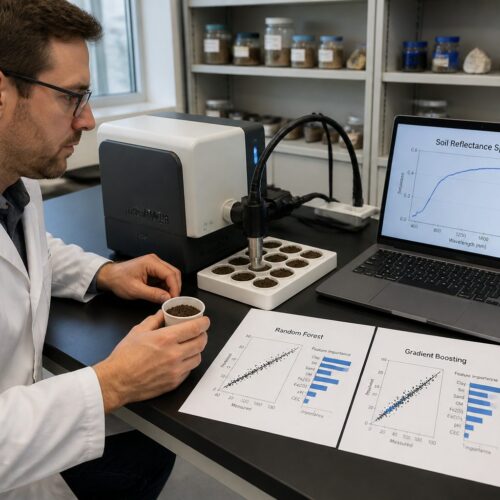
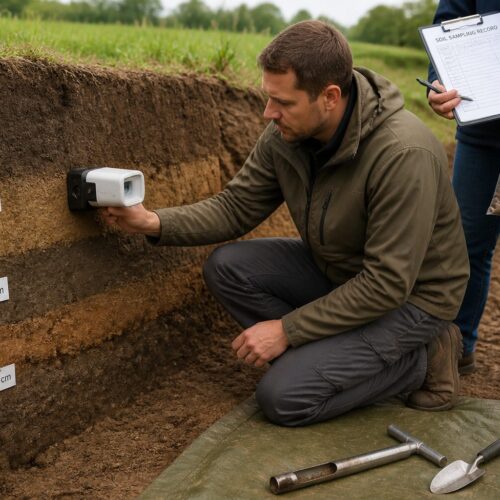
XRF instruments come in various configurations, including benchtop and portable models, allowing for both laboratory and field-based measurements. Portable XRF instruments are particularly useful for on-site soil analysis, providing real-time data for environmental monitoring and precision agriculture. The versatility and portability of XRF instruments contribute to its widespread adoption in soil science.
The Principle of XRF for Soil Analysis
The principle of XRF for soil analysis is based on the interaction of X-rays with the atoms present in the soil sample. When a soil sample is irradiated with X-rays from an X-ray tube, the X-ray photons interact with the inner-shell electrons of the atoms in the sample.

If the X-ray photon has sufficient energy, it can eject an inner-shell electron, creating a vacancy. This vacancy makes the atom unstable, and an electron from an outer shell will drop down to fill the vacancy, releasing energy in the form of a fluorescent X-ray photon.
The energy of the emitted fluorescent X-ray is specific to the element and the electron transition involved, allowing for the identification of the elements present in the soil sample. The intensity of the fluorescent X-ray is proportional to the concentration of the element in the sample, enabling quantitative analysis.
The XRF spectrometer detects and measures the energy and intensity of the fluorescent X-rays. The detector converts the X-ray photons into electrical signals, which are then processed to generate a spectrum. This spectrum shows the intensity of the X-rays as a function of their energy, with peaks corresponding to the elements present in the soil sample.
Preparing Soil Samples for XRF Measurement
Proper sample preparation is crucial for obtaining accurate and reliable results from XRF analysis of soil. The goal of sample preparation is to present a homogeneous and representative sample to the X-ray beam, minimizing matrix effects and ensuring accurate quantification of elements.
The specific sample preparation method depends on the type of XRF instrument used and the nature of the soil sample. Here are some common methods for preparing soil samples for XRF measurement.
| Sample Preparation Method | Description | Advantages | Disadvantages |
|---|---|---|---|
| Grinding and Pulverizing | Soil samples are ground to a fine powder using a mortar and pestle or a mechanical grinder. | Increases homogeneity, reduces particle size effects. | Can be time-consuming, may introduce contamination. |
| Pelletizing | Ground soil powder is pressed into a pellet using a hydraulic press. | Provides a stable and uniform sample for analysis. | Requires specialized equipment, may alter sample structure. |
| Loose Powder | Soil powder is directly placed in the sample holder without further processing. | Simple and quick, minimal sample alteration. | May suffer from particle size effects and heterogeneity. |
| Fusion | Soil sample is mixed with a flux and fused at high temperature to form a glass bead. | Eliminates matrix effects, provides high accuracy. | Time-consuming, requires specialized equipment and reagents. |
The choice of sample preparation method depends on the desired accuracy, the available resources, and the specific requirements of the analysis. For high-precision analysis, fusion is often preferred, while for rapid screening, loose powder or pelletizing methods may be sufficient.
Calibration and Quality Control in XRF Analysis
Calibration and quality control are essential steps in XRF analysis to ensure the accuracy and reliability of the results. Calibration involves establishing a relationship between the measured X-ray intensities and the concentrations of the elements in the sample.
This is typically done by analyzing a series of certified reference materials (CRMs) with known elemental compositions. The CRMs are used to create a calibration curve, which is then used to determine the concentrations of the elements in the unknown soil samples.
Quality control measures include analyzing quality control samples (QCS) along with the unknown samples to monitor the performance of the XRF instrument and the accuracy of the analysis. The QCS are samples with known elemental compositions that are analyzed regularly to check for any drift or bias in the measurements.
Additionally, it is important to perform regular instrument maintenance and validation to ensure that the XRF instrument is functioning properly. This includes checking the X-ray tube voltage and current, the detector resolution, and the overall stability of the instrument.
Identifying and Quantifying Elements Using XRF
XRF spectroscopy is a powerful technique for both qualitative and quantitative elemental analysis of soil samples. Qualitative analysis involves identifying the elements present in the sample based on the energies of the emitted fluorescent X-rays.
Each element has a unique set of characteristic X-ray energies, which can be used to identify its presence in the sample. Quantitative analysis involves determining the concentrations of the elements in the sample based on the intensities of the fluorescent X-rays.
The intensity of the X-rays is proportional to the concentration of the element, allowing for quantitative determination using calibration curves or mathematical models. XRF can detect a wide range of elements, from light elements such as magnesium and aluminum to heavy elements such as lead and uranium.
The detection limits for each element depend on the XRF instrument used, the sample matrix, and the measurement conditions. In general, XRF is more sensitive for heavier elements than for lighter elements, and it is more sensitive for elements present in high concentrations than for elements present in trace amounts. Careful optimization of the measurement conditions and appropriate sample preparation techniques can improve the detection limits for specific elements of interest.
Applications of XRF in Environmental Soil Science
XRF spectroscopy has numerous applications in environmental soil science, including assessing soil pollution, monitoring soil quality, and understanding soil processes. One of the primary applications of XRF is in the assessment of soil pollution, particularly heavy metal contamination.
XRF can rapidly and non-destructively measure the concentrations of heavy metals such as lead, arsenic, cadmium, and mercury in soil samples. This information can be used to identify contaminated sites, assess the extent of pollution, and monitor the effectiveness of remediation efforts.
- Mapping heavy metal distribution in urban soils
- Assessing the impact of industrial activities on soil quality
- Monitoring the fate and transport of pollutants in soil
- Evaluating the effectiveness of soil remediation techniques
- Identifying sources of soil contamination
XRF is also used to monitor soil quality by measuring the concentrations of essential plant nutrients such as phosphorus, potassium, and calcium. This information can be used to assess soil fertility, optimize fertilizer application, and improve crop yields.
XRF for Trace Element Analysis
Trace element analysis is a crucial aspect of soil science, providing insights into the geochemical processes, environmental contamination, and nutritional status of soils. X-ray fluorescence spectroscopy soil is well-suited for trace element analysis due to its ability to detect a wide range of elements with varying concentrations.
Trace elements, present in soils in concentrations of parts per million (ppm) or even parts per billion (ppb), play significant roles in plant nutrition, enzyme activity, and overall soil health. XRF can be used to quantify trace elements such as zinc, copper, manganese, iron, and molybdenum, which are essential for plant growth but can become toxic at high concentrations.
The ability to accurately measure trace element concentrations in soils is essential for assessing soil fertility and identifying potential nutrient deficiencies or toxicities. In environmental studies, XRF is used to monitor the presence and distribution of trace element pollutants, such as arsenic, cadmium, lead, and mercury.
These elements can accumulate in soils due to industrial activities, mining operations, or improper waste disposal, posing risks to human health and the environment. XRF provides a rapid and cost-effective method for screening soils for trace element contamination, enabling timely intervention and remediation efforts to protect ecosystems and human populations.
Advantages and Disadvantages of XRF
XRF spectroscopy offers several advantages over other analytical techniques for soil analysis. It is a non-destructive technique, meaning that the sample is not consumed or altered during the analysis, allowing for further analysis using other methods.
XRF is also a rapid technique, with analysis times typically ranging from a few minutes to a few hours per sample. Additionally, XRF can analyze multiple elements simultaneously, providing a comprehensive elemental profile of the soil sample in a single measurement.
However, XRF also has some limitations. The sensitivity of XRF is limited by the matrix effects and the detection limits of the instrument, which can vary depending on the element and the sample matrix. Matrix effects refer to the influence of the overall composition of the sample on the X-ray intensities of the elements of interest.
These effects can be minimized by careful sample preparation and the use of appropriate calibration methods, but they can still affect the accuracy of the analysis. Another limitation of XRF is its limited ability to detect light elements such as hydrogen, carbon, and nitrogen, which are important components of soil organic matter.
Recent Advances in XRF Technology
Recent years have witnessed significant advancements in XRF technology, enhancing its capabilities and expanding its applications in soil science. One notable development is the improvement in detector technology, with the introduction of silicon drift detectors (SDDs) and other advanced detectors.
These detectors offer higher energy resolution, improved count rates, and enhanced sensitivity, enabling more accurate and precise measurements of elemental concentrations in soil samples. Another advancement is the development of portable XRF instruments, which are compact, lightweight, and battery-powered.
Portable XRF instruments allow for on-site soil analysis, providing real-time data for environmental monitoring, precision agriculture, and other applications. These instruments are equipped with user-friendly software and GPS capabilities, enabling easy data collection and mapping of elemental distributions in the field.
Furthermore, advancements in data processing and analysis techniques have improved the accuracy and reliability of XRF measurements. Sophisticated software algorithms are now available for correcting matrix effects, compensating for spectral overlaps, and quantifying elemental concentrations in complex soil matrices. These advancements have made XRF an even more powerful and versatile tool for soil analysis.
Future Trends in Soil Spectroscopy
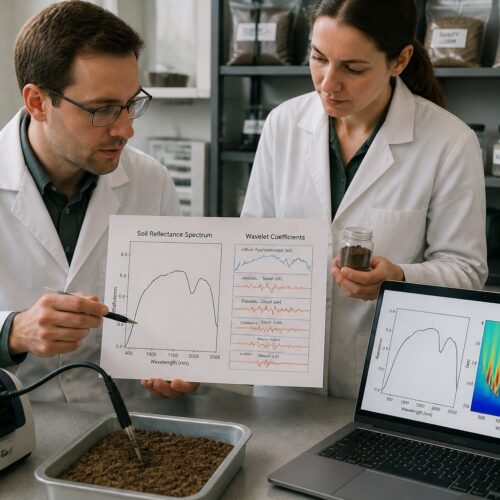
The field of soil spectroscopy is continuously evolving, with ongoing research and development efforts aimed at improving existing techniques and exploring new approaches. One future trend is the integration of XRF with other spectroscopic techniques, such as near-infrared (NIR) spectroscopy and mid-infrared (MIR) spectroscopy.
Combining XRF with NIR or MIR spectroscopy can provide a more comprehensive characterization of soil properties, including both elemental composition and organic matter content. Another trend is the development of hyperspectral imaging techniques for soil analysis.
Hyperspectral imaging involves collecting spectral data over a wide range of wavelengths for each pixel in an image, providing detailed information about the spatial distribution of soil properties. Hyperspectral imaging can be used to map soil properties such as organic matter content, moisture content, and nutrient levels, providing valuable information for precision agriculture and environmental monitoring.
The use of artificial intelligence (AI) and machine learning (ML) algorithms is also expected to play an increasing role in soil spectroscopy. AI and ML algorithms can be used to analyze complex spectral data, identify patterns and relationships, and predict soil properties with high accuracy.
Conclusion
X-ray fluorescence spectroscopy soil is a valuable technique for elemental analysis in soil science, offering rapid, non-destructive, and multi-elemental capabilities. Its applications range from assessing soil pollution and monitoring soil quality to understanding soil processes and optimizing agricultural practices.
With continued advancements in XRF technology and data analysis techniques, this method is expected to play an increasingly important role in addressing critical issues related to soil health and environmental sustainability. By harnessing the power of XRF, researchers and practitioners can gain valuable insights into the chemical makeup of soil.
These insights allow for the development of effective strategies for managing soil resources and protecting the environment. The future of soil spectroscopy is bright, with ongoing research and development efforts paving the way for even more powerful and versatile analytical tools.
As we continue to face challenges related to food security, environmental degradation, and climate change, the ability to accurately and efficiently analyze soil properties will become increasingly important. XRF spectroscopy, along with other advanced spectroscopic techniques, will be at the forefront of these efforts, helping us to better understand and manage our precious soil resources.