
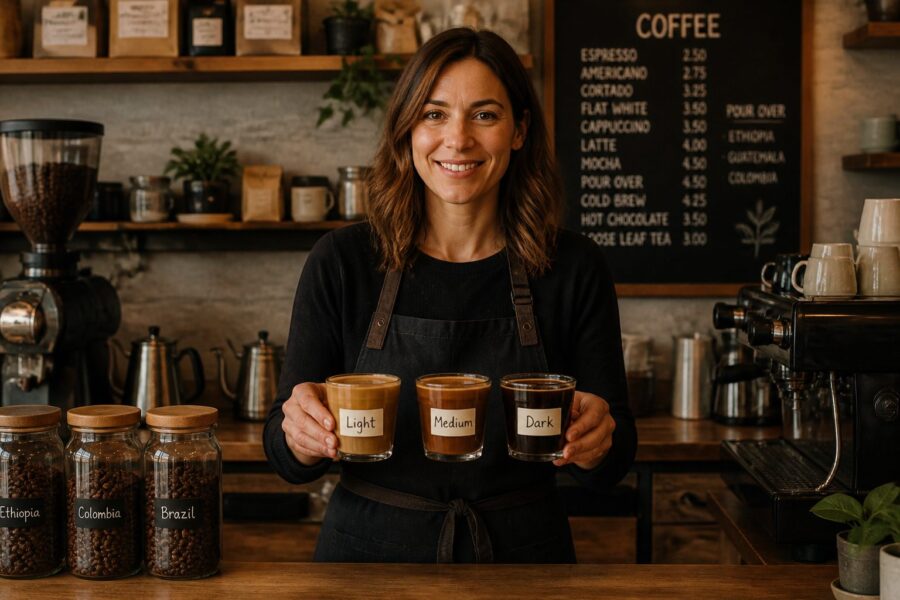
Light, medium, and dark coffee roasts describe how far beans have been roasted, but the labels do not function as precise measurements across every roaster; The light medium dark coffee roast differences usually show up in color, aroma, body, and the balance of flavors, though origin and brewing choices still shape the cup.
A roast label can help narrow down what to expect, not promise an exact taste; Two bags marked medium can taste different because the beans, roasting approach, and freshness differ; use the label as a starting clue and the coffee’s own description for more detail.
What roast level describes
Roasting applies heat to green coffee beans and changes their color, aroma, structure, and flavor; Light, medium, and dark describe a broad progression, but roasters do not use one universal scale with identical boundaries.
Roast level is separate from origin, processing method, and species, which describe other parts of the bean’s story and can influence flavor before roasting begins; Roasting may bring some qualities forward and make others less distinct, but it does not erase every difference among coffees.
Lighting, whole-bean versus ground appearance, and roasting style affect how color looks; A glossy surface can occur on some darker-roasted beans as oils move to the exterior, but appearance alone cannot identify a specific flavor or quality.
Light roast: more room for origin character
Light roasts tend to have a lighter brown appearance and can retain more of the distinct character associated with a particular coffee; People may describe them with fruit, floral, citrus, or bright flavor language, but tasting notes are descriptions, not ingredients added to the beans.
The cup may feel more lively or sharper to a drinker accustomed to darker coffee; That brightness can be pleasant, yet it can also be mistaken for a brewing flaw when the extraction is uneven or the water passes through too quickly; A sour impression is not proof that every light roast is poorly made.
Light-roasted beans are often firmer than darker ones, which can make them more demanding to grind or brew consistently; If a cup seems underdeveloped or thin, try a slightly finer grind or a more even pour before deciding that the roast itself is unsuitable.
Light roast can be a useful choice for someone curious about the character of a coffee’s origin or who enjoys a brighter cup; It is not inherently more refined or better; preference, preparation, and the particular bag matter.
Medium roast: a middle point, not a fixed flavor
Medium roast sits between lighter and darker roasting in broad terms; It may balance some brightness with more body and roast flavor, which is one reason the category feels familiar to many drinkers; But the word medium covers a wide range, rather than a single standardized profile.
A medium roast can work in automatic drip, pour-over, or immersion brewing, depending on the bean and the recipe; If a cup tastes flat, adjust grind or ratio rather than assuming the roast label tells you exactly what to change.
Roasters sometimes use additional names such as breakfast roast or house roast; These are not consistent technical definitions across brands, so check the printed roast description and flavor notes rather than treating a marketing name as an industry-wide standard.
Dark roast: stronger roast character
Dark roasts have spent longer under heat and often taste more roast-forward, with flavors that drinkers may describe as toasted, smoky, bittersweet, or chocolate-like; Their body can feel heavier, and the bean surface may show more oil, although not every dark roast looks the same.
As roasting progresses, some origin-specific flavors may become less prominent while flavors created by the roast become more noticeable; A dark roast can therefore taste more similar across different beans than a lightly roasted version, though the degree of similarity varies.
If a dark roast tastes sharply bitter or ashy, brewing may be adding to that impression; Try a slightly coarser grind, avoid letting brewed coffee sit hot for a long time, and check that the equipment is clean; These adjustments can improve the cup without claiming that every dark roast is bitter.
Dark roast often suits people who prefer a bold, roast-led flavor or who add milk and want the coffee character to remain noticeable; It is a preference, not a shortcut to more caffeine or better strength.
| Label | Common impression | What the label cannot guarantee |
|---|---|---|
| Light | Brighter, more distinct origin character | Specific fruit or floral notes |
| Medium | Often balanced between brightness and roast flavor | One standard color or flavor profile |
| Dark | More roast-forward, sometimes heavier or bittersweet | Higher caffeine or a particular level of bitterness |
These are broad tendencies, not promises for each bag; The beans and brewing method can shift how a roast tastes, and a roaster may define the categories differently from another company.
Roast level and caffeine: avoid a simple assumption
The claim that dark roast always has more caffeine than light roast is too simple; Caffeine comparisons depend on how the coffee is measured and prepared, including whether the dose is weighed or scooped and how much coffee goes into the serving.
Roasting changes bean mass and volume, which can make scoop-based comparisons misleading; A scoop of one roast may not contain the same mass as a scoop of another; To make a fair kitchen comparison, weigh the coffee dose and keep the brew method and serving size the same.
If caffeine amount is important to you, roast color is not a reliable way to calculate it; Check specific product information when available and remember that brewing and serving choices also affect what ends up in the cup.
Choose a roast for the cup you enjoy
If you like crisp, bright flavors, begin with a light roast and brew it carefully enough to avoid an under-extracted cup; If you want a familiar balance, try a medium roast; If toasted, bold flavors appeal to you, explore dark roast and see how it tastes black or with milk.
When comparing bags, keep the preparation similar; Use the same brewer, coffee dose, water amount, and grind setting where possible, then notice which cup has the aroma, body, and finish you prefer; Changing several things at once makes the comparison hard to interpret.
Look beyond the roast word when a bag provides more detail; Origin, processing, and tasting notes can help explain why two coffees with the same roast label differ; If a description says citrus or cocoa, treat that as a cue to look for a resemblance, not a claim that the coffee contains those ingredients.
A practical way to read roast labels
The label tells you roughly how far the roaster took the beans, while tasting notes describe the flavors the seller associates with the coffee; Neither one predicts the whole cup, because grind, water, freshness, and brewing method remain part of the result.
Try a roast at its suggested preparation if the bag provides one, then change one brewing variable if the cup is too sharp, dull, or bitter; A familiar method such as pour-over or French press can make those adjustments easier to track.
There is no single best roast for everyone; Choosing light, medium, or dark is a matter of matching the flavor direction you enjoy with the coffee and method at hand, then trusting the cup more than the label alone.
Choose based on the flavor direction you enjoy: light roasts often emphasize brighter impressions, medium roasts can sit between brightness and roast character, and dark roasts are usually more roast-forward; These are broad tendencies, so use the bag description and your own taste.
Smoothness is subjective and depends on the coffee and brewing method, not only the roast label; Some people prefer the rounded feel of a medium roast, while others find a lighter or darker coffee smoother.
The categories describe how far the beans have been roasted; Light roasts often retain more origin character, medium roasts may balance brightness with roast notes, and dark roasts tend to taste more roast-forward; individual coffees vary.
Roast level also changes how many brewers choose their water temperature; see the Coffee Brewing Temperature Guide.